

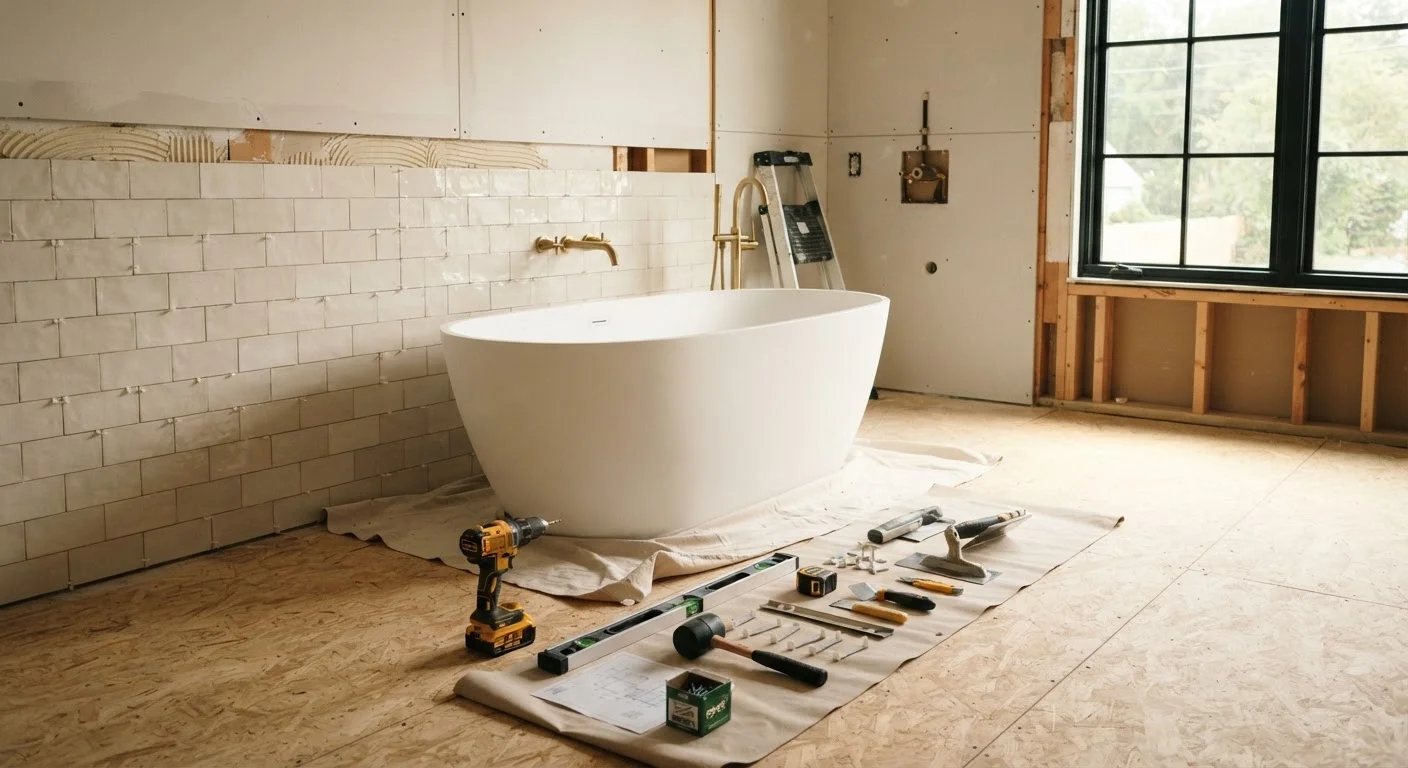
Start With a Clear Scope of Work
Before a single fixture is touched, you need a written scope of work that distinguishes what you're changing from what you're keeping. Bathroom remodels fall broadly into three tiers: cosmetic refreshes (paint, hardware, vanity swap), mid-level renovations (new tile, tub replacement, updated lighting), and full gut renovations (moving walls, relocating drains, complete replumb). Each tier carries different cost profiles, timelines, and permitting requirements.
Walk through your bathroom and document every element: flooring condition, wall tile integrity, existing plumbing locations, window placement, and ceiling height. Note what's functional versus what's purely aesthetic. A leaky drain flange or soft spot in the subfloor discovered during demo - rather than before it - will derail your timeline and budget. See our pre-renovation checklist for a room-by-room inspection guide before you break ground.
If you're comparing this project to a kitchen overhaul, note that bathroom sequencing has its own logic - see how the two differ in our kitchen renovation sequencing guide.
Permits, Codes, and Licensed Trades
Most bathroom remodels - even mid-level ones - require permits from your local building department. In virtually every U.S. jurisdiction, moving or extending plumbing supply or drain lines, adding or modifying electrical circuits, and structural changes all require permits and inspections by a licensed professional.
Unpermitted Work Has Real Consequences
Completing plumbing, electrical, or structural bathroom work without required permits is not just a code violation - it can void your homeowner's insurance for related claims, require costly tear-out and re-inspection before a home sale, and create liability if the work causes damage or injury. Always confirm permit requirements with your local building or planning department before work begins.
Cosmetic work - replacing a vanity with an identical one, swapping faucets, repainting - typically does not require a permit, but always verify with your local building department before assuming. Requirements vary by municipality, and unpermitted work can create serious complications when you sell your home.
Hire licensed plumbers and electricians for all rough-in and supply work. In many states, homeowners may pull their own permits for work on their primary residence, but code compliance and inspection still apply. Ask your local department specifically about owner-builder rules.
Plumbing and Electrical: The Rough-In Reality
Rough-in dimensions are the fixed measurements that determine where your toilet, shower, and tub connect to the drain system inside the wall or floor. The most common toilet rough-in is 12 inches from the finished wall to the drain center - but 10-inch and 14-inch variations exist. Ordering a fixture before confirming your rough-in is a costly mistake.
If you plan to move a toilet, tub, or shower drain even a few inches, a licensed plumber must cut into the subfloor and reroute drain lines - a significant labor expense. The general rule: keep fixtures where the drain already is unless your budget accounts for substantial plumbing work.
On the electrical side, bathrooms require GFCI (ground fault circuit interrupter) protected outlets within reach of water sources, proper circuit separation for high-draw items like heated floors and exhaust fans, and code-compliant fixture placement near showers. These are not DIY gray areas - consult a licensed electrician for any new circuits or outlet work.
Layout, Tile, and Fixture Selection
Your layout choices are constrained by existing plumbing locations, door swing, and the square footage of the room. In smaller bathrooms (under 50 sq ft), a 30×60-inch tub/shower combo may be the only realistic option. Larger bathrooms open up possibilities like a freestanding tub, a walk-in shower, or a double vanity - but each requires adequate supply lines, drain positioning, and clearance per local codes.
Order your tile and fixtures before demo day, not after. Lead times on specialty tile can run 4-8 weeks, and a half-demolished bathroom waiting on a backordered shower pan is a common - and avoidable - delay.
Supply chain delays are among the most frequent causes of bathroom renovation overruns; pre-ordering locks in your materials and keeps trades on schedule.
When planning shower tile, dry-lay your tile pattern on the floor before cutting anything. This reveals how cuts will fall at the edges and lets you adjust the starting point to avoid awkward slivers at eye level.
Tile layout errors discovered mid-installation waste material and add labor costs; dry layout takes less than an hour and prevents mistakes that are highly visible in the finished room.
When selecting tile, consider slip resistance (expressed as a COF - coefficient of friction - rating; wet areas should meet a minimum of 0.60 for floors), grout line width, and maintenance demands. Large-format tiles (24×24 and up) look sleek but require a very flat substrate and skilled installation. Mosaic tiles offer better slip resistance on shower floors but demand more grout maintenance.
Fixtures - faucets, showerheads, toilets - should be selected before the rough-in is finalized, so supply lines are placed at the correct height and spacing. Confirm that your chosen toilet's rough-in matches your existing drain, and verify the flow rate of showerheads against any local water-conservation ordinances.
Ventilation and Moisture Control
Inadequate ventilation is the leading cause of bathroom mold, paint failure, and structural moisture damage. The IRC (International Residential Code), adopted in most U.S. states, requires mechanical ventilation - an exhaust fan - in any bathroom without an operable window, and recommends it even when a window exists.
Size your fan to the room: the standard formula is 1 CFM (cubic feet per minute) of airflow per square foot of bathroom space, with a minimum of 50 CFM. For bathrooms over 100 sq ft, add 50 CFM per toilet, shower, and tub. Fans must vent to the exterior - not into an attic or wall cavity - via insulated ductwork to prevent condensation buildup.
Beyond the fan, use cement backer board (not drywall) behind all tile in wet areas, apply a waterproofing membrane inside the shower before tiling, and slope shower floors correctly toward the drain (typically 1/4 inch per foot). These steps are what separate a bathroom that lasts 20 years from one that needs remediation in five.
Budgeting Honestly for the Full Project
Bathroom remodel costs vary widely by scope, region, and finish level, but homeowners consistently underestimate the full picture. Labor typically represents 40-65% of total project cost. Materials - tile, fixtures, vanity, lighting - make up most of the rest, but don't overlook permit fees, disposal costs, and the very real possibility of concealed damage once walls open up.
Bathrooms in homes built before 1980 may contain asbestos floor tile or mastic adhesive, lead paint, or galvanized supply pipes that need replacement - none of which is visible before demolition. Budget a contingency of at least 15-20% above your base estimate for these discoveries. Our article on unexpected renovation costs breaks down the most common budget surprises in detail.
Once your bathroom is complete, ongoing maintenance becomes the priority. Our home maintenance guide for first-time owners covers the upkeep tasks that protect your new investment over time. If this is your first renovation project, review our advice on choosing a manageable first project to calibrate your expectations before committing to a full gut renovation.
This article provides general home improvement information for educational purposes only. Always consult licensed professionals and your local building department before beginning any renovation work. Requirements vary by location.
The content on this site is provided for informational purposes only and should not be considered a substitute for professional advice. While we strive to provide accurate and up-to-date information, we make no guarantees regarding its completeness or accuracy. Always consult a qualified professional for advice specific to your circumstances before making any decisions.