

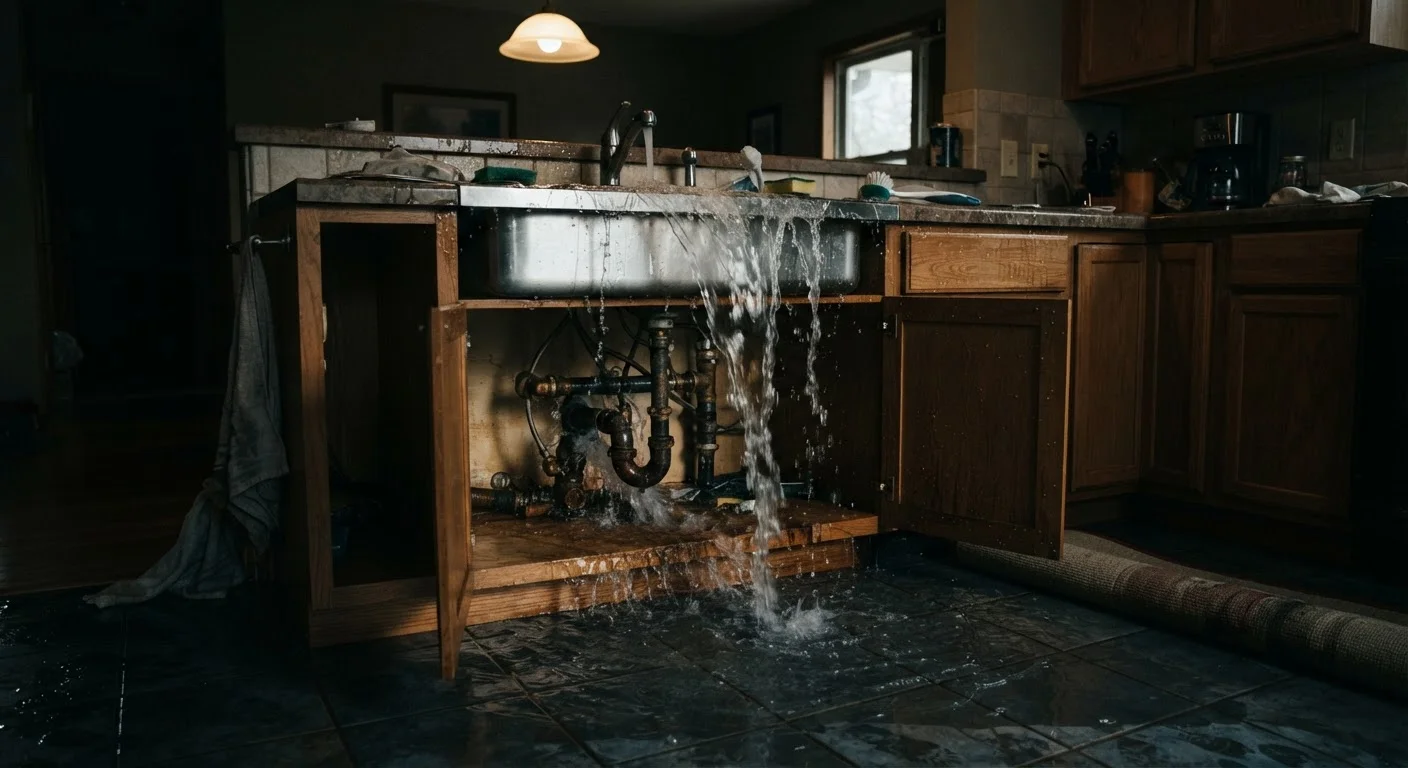
Why Plumbing Myths Are Particularly Costly
Plumbing problems rarely announce themselves dramatically - until they do. A slow drip becomes a burst pipe, a "minor" clog becomes a sewage backup, and a harmless habit becomes a $4,000 repair bill. The reason many homeowners end up in those situations isn't negligence - it's misinformation passed down through generations of well-meaning advice that was never accurate to begin with.
Understanding what's actually true about your home's plumbing can prevent expensive emergencies and help you spot warning signs early. Just as overlooking your home's exterior drainage can trigger foundation and basement damage - as explored in our piece on the real cost of neglecting gutters - ignoring internal plumbing myths carries its own outsized consequences.
Myth
"Flushable" wipes are safe to flush because the packaging says so.
Fact
Most wipes marketed as flushable do not disintegrate in water the way toilet paper does and are a leading cause of sewer blockages.
Toilet paper is engineered to break apart rapidly when wet. Most wipes - even those labeled "flushable" - are made from synthetic or semi-synthetic fibers that hold their structure through repeated moisture exposure. Wastewater utilities across the country have documented that these wipes accumulate in sewer pipes, bind with fats and oils, and form large, dense blockages sometimes called "fatbergs." If your home has older or narrower pipes, the risk of a clog forming before the material even reaches the municipal sewer is significant. The safest practice: dispose of all wipes, including baby wipes and personal care wipes, in the trash.
Myth
Running water while using the garbage disposal flushes everything through safely.
Fact
Water helps move waste through the drain, but it does not prevent fibrous, starchy, or greasy materials from causing blockages or damaging the disposal unit.
Water is a helpful companion to your garbage disposal - not a guarantee of safe passage. Certain foods are notorious for causing problems regardless of how much water you run: fibrous vegetables like celery and artichoke leaves can tangle around the disposal's impellers; starchy foods like pasta and potato peels expand and congeal in pipes; and fats, oils, and grease solidify as they cool in the drain line, eventually building up into a clog. The correct approach is to avoid putting these materials down the disposal entirely, run cold water (not hot, which can liquefy grease and push it further into pipes before it re-solidifies) before, during, and briefly after use, and process small amounts at a time rather than all at once.
Myth
A slow drain is just an annoyance - it's not worth worrying about.
Fact
A consistently slow drain is a symptom of a developing blockage or venting problem that will worsen over time and may indicate a deeper issue in your drain system.
Slow drainage is one of the earliest and most actionable warning signs your plumbing can give you. A drain that empties noticeably slower than it used to is telling you that something - hair, soap scum, grease buildup, or a partial obstruction further down the line - is already restricting flow. Left unaddressed, partial blockages become complete ones, and complete blockages can cause water to back up into fixtures, overflow onto floors, or even push sewage back through lower drains. If multiple fixtures in your home are draining slowly at the same time, that points to a problem in the main drain line - a situation that warrants a professional inspection rather than a bottle of drain cleaner.
Myth
Chemical drain cleaners are the safest and most effective way to clear a clog.
Fact
Chemical drain cleaners can corrode pipes, damage fixtures, pose safety hazards to skin and eyes, and often fail to fully remove the clog.
The active ingredients in most chemical drain cleaners - typically sodium hydroxide (lye) or sulfuric acid - generate heat as they react with organic matter. That heat and chemical action can degrade older metal pipes, warp PVC, and damage the rubber gaskets and washers that keep joints watertight. Beyond the pipe damage risk, these products are genuinely hazardous to handle: splashing can cause chemical burns, and mixing different drain cleaners or using them after another product has already been applied can produce toxic gases. For most household clogs, a drain snake (hand auger) or a plunger is safer, more effective, and less damaging. For stubborn or recurring clogs, a plumber with a motorized auger or hydro-jetting equipment is the appropriate solution.
Myth
A dripping faucet is a minor inconvenience that wastes very little water.
Fact
A single dripping faucet can waste thousands of gallons of water per year and signals a worn part that will eventually fail completely.
A faucet dripping at one drip per second - a rate many homeowners would describe as "barely dripping" - loses approximately 3,000 gallons of water annually, according to estimates from the U.S. Environmental Protection Agency's WaterSense program. Beyond the water bill impact, a dripping faucet is almost always caused by a worn washer, O-ring, or cartridge. These components don't heal themselves; they continue to deteriorate until the faucet leaks more substantially or the valve seat beneath it becomes damaged, turning a simple washer replacement into a more involved repair. Fixing a dripping faucet promptly is one of the highest-return, lowest-cost maintenance tasks a homeowner can perform.
Myth
You only need to worry about pipes freezing if you live in a very cold climate.
Fact
Pipes in homes in mild climates can be more vulnerable to freezing because they are often less insulated and located in unprotected spaces.
Homes built in regions that rarely experience freezing temperatures are frequently constructed without the pipe insulation or interior routing that protects plumbing in colder climates. When an unusual cold snap hits - as has occurred with increasing frequency in parts of the southern United States - pipes in exterior walls, crawl spaces, garages, and under mobile homes can freeze and burst quickly because there is no thermal buffer. Any pipe exposed to temperatures below 32°F (0°C) for a sustained period is at risk. During cold snaps, allow a thin trickle of water to run from faucets served by exterior-wall pipes, open cabinet doors under sinks to allow warm air circulation, and make sure outdoor hose bibs are drained and shut off at their interior valves.
When to Call a Licensed Plumber
Knowing the myths is half the battle - knowing your limits is the other half. Some plumbing tasks, like replacing a faucet aerator or clearing a simple P-trap clog, are genuinely DIY-friendly with the right tools and care. Others - including anything involving your main shut-off, drain lines deeper than the fixture trap, water heater connections, or any work tied to gas lines - should be handled by a licensed plumber.
Know Where Your Main Water Shut-Off Is
Before any plumbing emergency occurs, locate your home's main water shut-off valve and make sure every adult in the household can operate it. In a burst pipe or major leak situation, turning off water at the main valve immediately can prevent thousands of dollars in water damage. Shut-off valves are typically located near the water meter, in a utility room, or along the foundation wall where the supply line enters the home.
Unpermitted plumbing work can also create complications when you sell your home. Many municipalities require permits for work beyond basic fixture replacement. If you're unsure whether a repair needs a permit or a professional, contact your local building department before you start. Arming yourself with facts - whether about plumbing, electrical systems (see our guide on DIY electrical misconceptions), or home finances - is always the smartest first step.
The content on this site is provided for informational purposes only and should not be considered a substitute for professional advice. While we strive to provide accurate and up-to-date information, we make no guarantees regarding its completeness or accuracy. Always consult a qualified professional for advice specific to your circumstances before making any decisions.