

Our Verdict
Neither furnished nor unfurnished rentals are universally better - the right choice depends on how long you plan to stay, what furniture you already own, and how much monthly cost flexibility you have. For stays under a year, furnished units often make financial sense despite higher rent. For longer commitments, unfurnished rentals typically offer better value and more personal control.
| Best for | Recommended |
|---|---|
| Short-term stays, corporate relocations, or travel assignments | Furnished rental |
| Renters settling in for a year or more with existing belongings | Unfurnished rental |
| First-time renters or those moving from a shared living situation without furniture | Furnished rental |
| Renters who want full control over layout, style, and appliances | Unfurnished rental |
What 'Furnished' and 'Unfurnished' Actually Mean
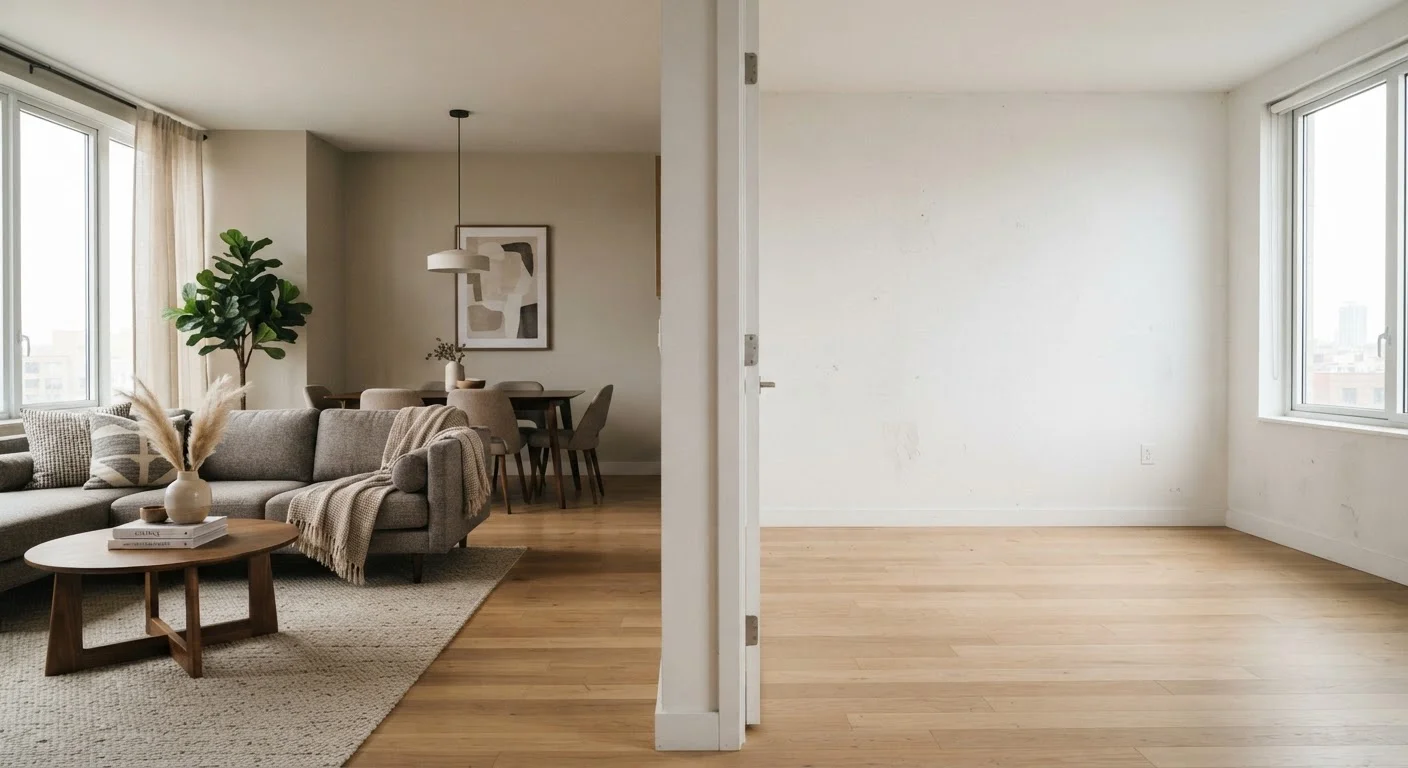
These terms sound self-explanatory, but there is no universal standard for what a landlord must include in a furnished rental. In practice, a furnished unit typically includes a bed frame and mattress, seating, a dining table and chairs, and basic kitchen appliances beyond the stove and refrigerator. Some furnished rentals also include linens, cookware, and internet service. Others include little more than a couch and a lamp.
Unfurnished units, by contrast, are delivered empty or nearly so. Most will include major fixed appliances - refrigerator, stove, sometimes a dishwasher - but nothing you would move in and out yourself. Before signing any lease, ask for a written inventory list that specifies exactly what is and is not included. This protects both parties and becomes essential if a dispute arises over damages or missing items at move-out.
If you are new to renting, see our complete walkthrough for first-time tenants for a broader overview of how the rental process works from search to signing.
The Cost Equation: Rent, Deposits, and Hidden Expenses
Furnished units command a meaningful rent premium. Industry estimates generally place that premium between 15% and 30% above comparable unfurnished units in the same market, though figures vary widely by city and property type. In high-demand urban markets, the gap can be even larger.
Security deposits also differ. Because furnished rentals include more property at risk of damage, landlords often require larger deposits - sometimes covering both a standard security deposit and a separate furniture deposit. Some states cap the total deposit a landlord can collect, so it is worth verifying your state's tenant protection rules before signing.
On the unfurnished side, your upfront costs shift toward furnishing the space yourself. Outfitting even a modest one-bedroom apartment can cost $3,000-$8,000 or more depending on quality. That is a real expense, though furniture you own travels with you and retains some resale value - unlike rent paid for furniture you will never keep.
| Furnished Rental | Unfurnished Rental | |
|---|---|---|
| Monthly rent | 15-30% premium over unfurnished | Lower baseline monthly cost |
| Upfront costs | Higher deposit; lower setup costs | Lower deposit; furniture purchase required |
| Move-in ease | High - move in with minimal logistics | Lower - requires furnishing and moving |
| Personal control | Limited - landlord's furniture and style | Full - choose your own layout and pieces |
| Best stay length | Under 12 months | 12 months or longer |
| Damage liability | Higher - furniture included in scope | Lower - only structural/appliance items |
| Ideal renter profile | Relocating professionals, short-term tenants | Long-term renters, those with existing furniture |
For guidance on how lease structure compounds these cost differences, see our comparison of month-to-month vs. fixed-term leases.
Practical Considerations: Flexibility, Control, and Move-In Logistics
A furnished rental significantly reduces the friction of moving. There is no need to coordinate a moving truck for large items, navigate narrow stairwells with a sectional sofa, or wait weeks for furniture deliveries. For someone relocating for work, managing an estate, or transitioning between living situations, this logistical simplicity has genuine value that monthly cost comparisons alone do not fully capture.
However, furnished units come with a trade-off in personal control. You live with someone else's taste, and in most cases you cannot modify or replace the provided furniture without landlord approval. Wear and tear becomes a more complicated conversation at move-out: what counts as normal use versus damage to the landlord's property? Documenting the condition of every item with photos at move-in is not optional - it is essential.
Unfurnished units, by contrast, allow you to design your space entirely. You choose the layout, the quality of furniture, and whether to add a standing desk or swap in your own appliances. This autonomy matters most for renters who stay in one place for a year or longer. If you are still searching for the right unit in a competitive market, our piece on apartment hunting in a tight market offers practical strategies for securing a unit before it disappears.
How to Make the Call for Your Situation
The clearest deciding factor is expected length of stay. A rough rule of thumb: if you plan to stay fewer than 12 months, the convenience and avoided furniture costs of a furnished unit often offset the rent premium. Beyond 12 months, the cumulative rent premium typically exceeds what you would spend furnishing a comparable unit yourself.
Beyond time horizon, consider what you already own, what stage of life you are in, and how certain your plans are. A graduate student on a two-year program has different priorities than a professional relocating with a household of furniture already in storage. Neither choice is inherently smarter - it depends on your specific circumstances.
It is also worth noting that the furnished vs. unfurnished question is one layer within the broader rent-or-buy decision that many Americans face. Our editorial team has examined what the rent-vs.-buy decision really comes down to if you are thinking through a longer-term housing strategy.
Whatever you choose, read your lease carefully, document everything, and understand your rights as a tenant in your state before you sign.
The content on this site is provided for informational purposes only and should not be considered a substitute for professional advice. While we strive to provide accurate and up-to-date information, we make no guarantees regarding its completeness or accuracy. Always consult a qualified professional for advice specific to your circumstances before making any decisions.