

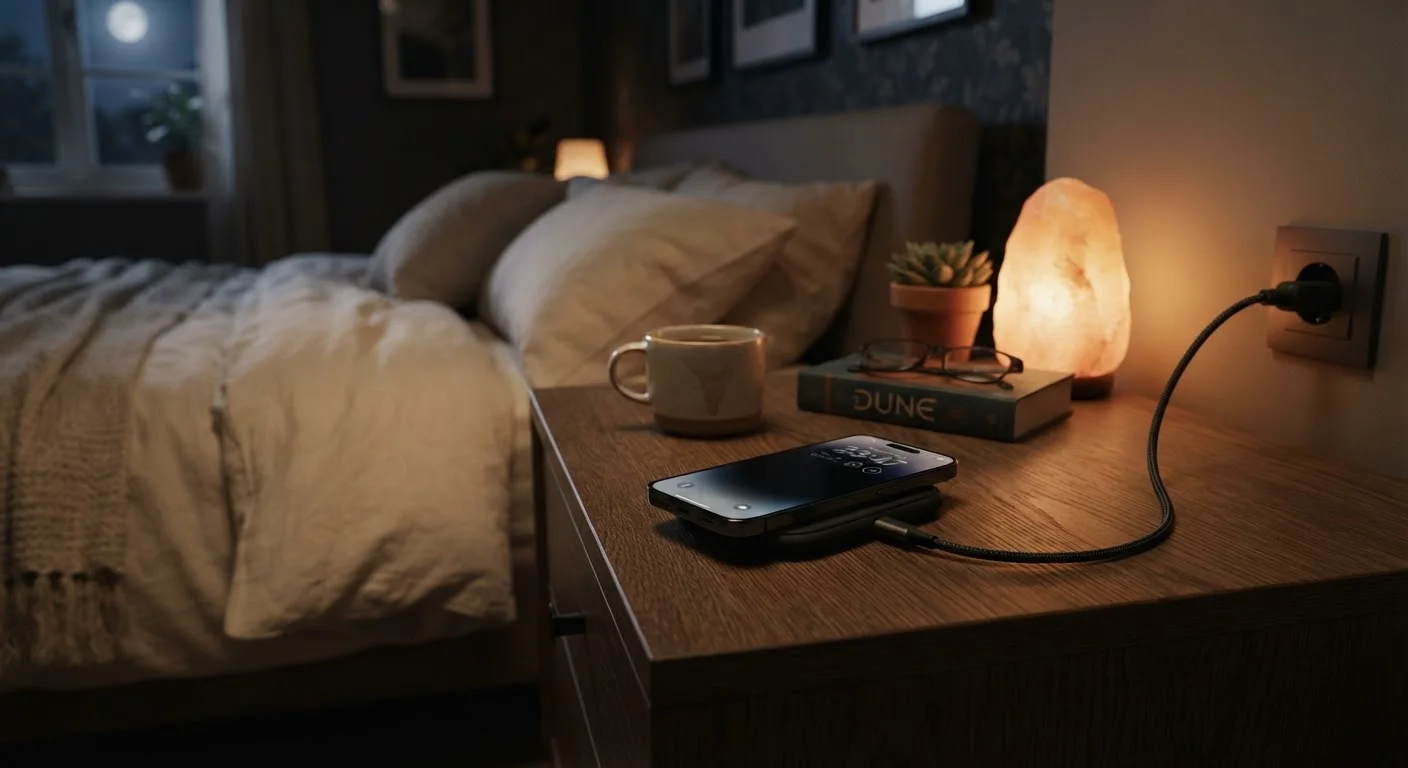
Why the Overnight Charging Debate Exists
Overnight charging has been a source of anxiety for smartphone owners since the earliest days of consumer lithium-ion batteries. Warnings circulated for years that leaving your phone plugged in would "ruin" the battery, overheat the device, or even create a fire hazard. Some of those concerns had a kernel of truth - but battery technology and the software managing it have advanced substantially. Sorting out what's still relevant from what's outdated requires understanding how modern batteries actually work.
The core issue isn't whether your phone charges overnight. It's the conditions under which it does - temperature, charger quality, and how long it sits at full capacity. Everyday charging habits have a cumulative effect on how long your device stays useful.
Myth
Leaving your phone plugged in overnight will overcharge the battery and ruin it.
Fact
Modern smartphones stop actively charging once they reach 100% - they cannot technically "overcharge."
Lithium-ion batteries in today's smartphones are paired with charge controllers - small chips that cut off the current when full capacity is reached. Your phone isn't passively absorbing electricity all night; the hardware manages the flow. However, staying parked at 100% for hours does create a form of stress called high-state-of-charge stress, which gradually erodes battery capacity over months and years. It's not overcharging in the dangerous sense, but it's not entirely harmless either.
Myth
You should always drain your phone battery completely before recharging it.
Fact
Full discharges stress lithium-ion batteries; frequent partial charges are actually healthier.
This advice made sense for older nickel-cadmium (NiCd) batteries, which suffered from a "memory effect" if not fully discharged. Lithium-ion chemistry - used in virtually every smartphone made in the last decade - works differently. Deep discharges below around 20% put more strain on battery cells. Charging in shorter, more frequent sessions and staying within a 20-80% range is widely considered better practice for long-term battery health.
Myth
Fast charging is damaging your battery much faster than regular charging.
Fact
Fast charging generates more heat during the charging window, but modern phones manage this carefully.
Fast charging does produce more heat than standard charging, and sustained heat is genuinely hard on lithium-ion cells. But most smartphones that support fast charging are engineered to ramp down speeds as the battery approaches full capacity, minimizing heat exposure. The incremental long-term difference between regular and fast charging on well-designed devices is generally modest. That said, using fast charging all the way to 100% daily - and leaving it plugged in - is a less battery-friendly routine than charging to 80% and unplugging. See how your phone's settings affect battery life for related adjustments worth making.
Myth
Optimized or scheduled charging features don't actually make a difference.
Fact
Optimized charging genuinely reduces time spent at 100%, which measurably slows battery aging.
Most current smartphones - across major operating systems - include an optimized or scheduled charging mode. These features learn your routine and delay topping off to 100% until shortly before you typically wake up. This reduces the number of hours the battery spends at peak charge, which is one of the known contributors to capacity loss over time. Turning this feature on in your settings is one of the simplest, most impactful steps you can take. For more on habits that quietly wear out your devices, small adjustments across your routine add up significantly.
Myth
Battery percentage is a perfectly accurate readout of what's left in your battery.
Fact
Battery percentage estimates are calculated by software and become less accurate as batteries age.
Your phone's battery indicator is an estimate derived from voltage and historical charge behavior - not a direct measurement of remaining energy. As lithium-ion cells age and their maximum capacity shrinks, the software calibration can drift, leading to sudden drops or readings that don't match real-world performance. This is why older phones sometimes jump from 30% to shutting down unexpectedly. It's a sign of battery aging, not a software bug.
What You Can Do Tonight to Protect Your Battery
Practical steps don't require obsessive monitoring. Enable optimized or scheduled charging in your phone's battery settings - it's the single highest-impact change for overnight charging habits. Charge on a hard, ventilated surface and consider removing thick cases that trap heat. If your phone supports it, setting a charge limit cap (often found in battery or settings menus on recent devices) to around 80-85% is a meaningful step for heavy daily users.
Heat Is the Real Battery Killer
Charging your phone while it sits inside a case - especially a thick or insulating one - traps heat and accelerates lithium-ion battery degradation over time. Resting your phone on soft surfaces like pillows or blankets during charging can also block ventilation. For best results, remove the case or charge on a hard, flat surface with airflow.
Traveling with your device introduces additional concerns beyond battery health - from public charging stations to network safety. If you're on the go, protecting your devices while traveling covers practical steps worth reviewing before your next trip.
Cheap Third-Party Chargers Carry Real Risk
Not all charging cables and adapters are built to the same safety standards. Uncertified third-party chargers have been linked to overheating events and, in rare cases, electrical hazards. Look for chargers that carry recognized safety certification markings and are designed for your specific device. This applies especially when charging overnight while unsupervised.
Battery health is a slow-moving variable. No single night of charging will make or break your phone, but consistent habits compounded over a year or two of daily use make a measurable difference in how long your battery holds a useful charge.
The content on this site is provided for informational purposes only and should not be considered a substitute for professional advice. While we strive to provide accurate and up-to-date information, we make no guarantees regarding its completeness or accuracy. Always consult a qualified professional for advice specific to your circumstances before making any decisions.