

The Three Types of 5G (and Why They're Not the Same)
When carriers advertise 5G, they're not always talking about the same thing. There are three distinct frequency bands, and understanding them explains most of the confusion people have about 5G performance.
- Low-band 5G operates below 1 GHz. It travels long distances and penetrates buildings well, which makes it easy to deploy across wide areas - including rural regions. The trade-off: speeds are often only marginally faster than 4G LTE.
- Mid-band 5G (roughly 1 GHz to 6 GHz) is the sweet spot. It offers meaningfully faster speeds than 4G while still covering a reasonable geographic area. This is the band responsible for the most noticeable real-world 5G improvements most users will experience.
- Millimeter wave (mmWave) operates above 24 GHz and delivers the blazing theoretical speeds - sometimes exceeding 1 Gbps - that dominate 5G marketing. The catch: mmWave has extremely limited range and struggles to pass through walls or even glass. It's typically only available in specific outdoor spots in dense urban areas like stadiums, airports, and city centers.
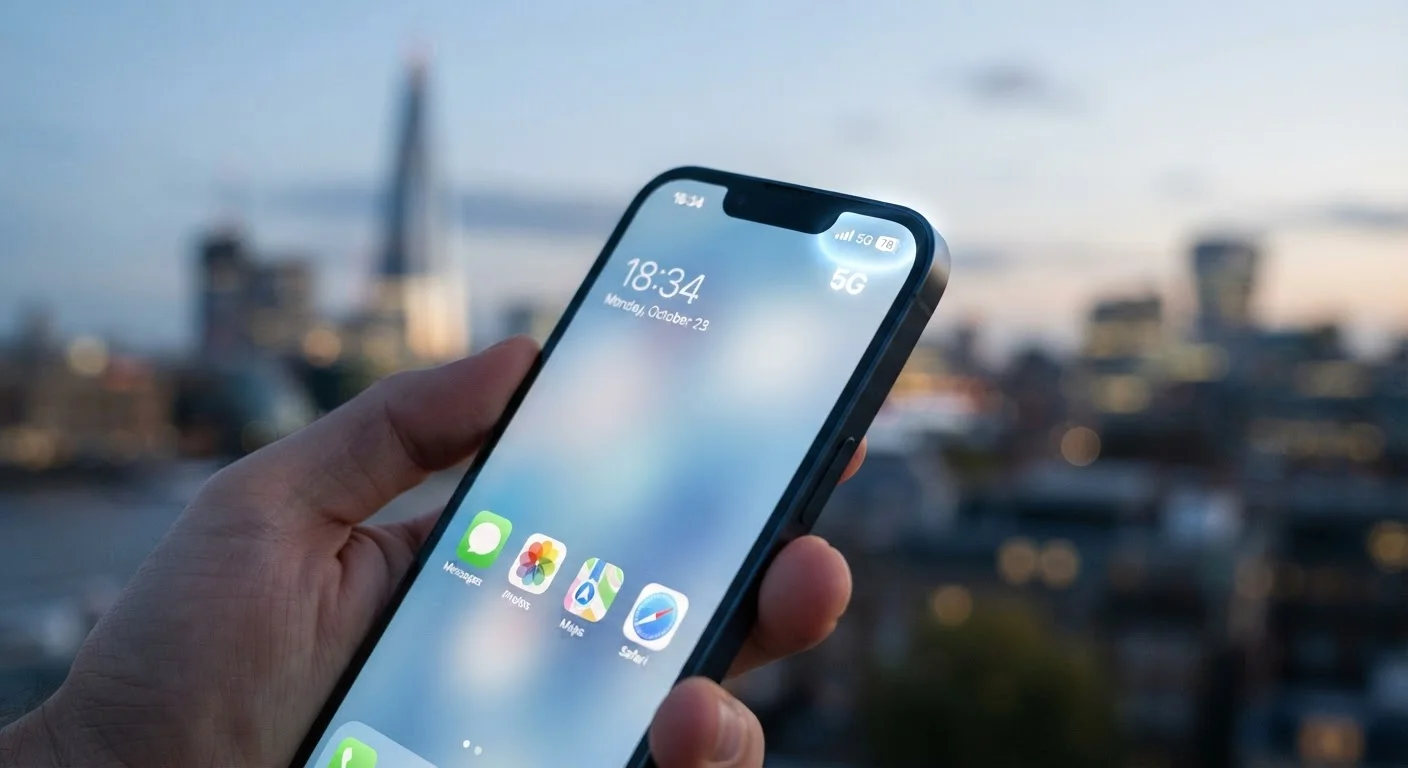
Your phone may display "5G" regardless of which band it's connected to, so the icon alone tells you very little about actual performance.
What 5G Actually Changes Day-to-Day
For most people in most situations, the practical difference between 4G LTE and low-band 5G is modest. Streaming video, loading web pages, and scrolling social media are activities that 4G handles comfortably - and 5G doesn't dramatically transform them.
Where 5G delivers a genuinely noticeable difference:
- Downloading large files. Grabbing a big app update, a movie for offline viewing, or a large document is noticeably quicker on mid-band 5G.
- Crowded venues. At concerts, sporting events, or busy transit hubs, 4G networks often become congested and slow. 5G's higher capacity means more devices can connect simultaneously without as much degradation.
- Low-latency applications. Real-time gaming, video calls, and applications that depend on fast response times benefit from 5G's lower latency - the time it takes for data to make a round trip between your phone and the network.
~10x
Peak speed increase of mid-band 5G over 4G LTE
Industry benchmarks suggest mid-band 5G can deliver peak download speeds roughly 10 times faster than typical 4G LTE under ideal conditions, though real-world results vary widely.
<1 ms
Target latency for 5G networks
The 5G standard targets latency under 1 millisecond under ideal conditions, compared to typical 4G LTE latency of 30-50 ms, which matters most for real-time applications.
~300 ft
Typical effective range of mmWave 5G
Millimeter wave 5G, despite its extreme speed potential, generally has an effective outdoor range of only a few hundred feet and struggles significantly with physical obstructions.
One area where the change is less glamorous: battery life. Because 5G radios can draw more power - especially when searching for signal or connected to mmWave - some users notice shorter battery life. Many Android phones and some iPhones offer a setting to default to LTE and only switch to 5G when it provides a meaningful benefit. This is worth enabling if battery longevity is a priority. See how other phone settings may be working against you for more practical adjustments.
Does Your Current Phone and Plan Support 5G?
Two things need to be true before 5G is available to you: your phone must have a 5G modem built in, and your carrier plan must include 5G access in your area.
Most flagship and mid-range smartphones released since 2021 include 5G hardware. If you're unsure whether your phone supports it, check the manufacturer's specifications page for your model - this is covered in more depth in our guide to phone specs that actually matter.
On the carrier side, 5G is included in most current postpaid plans, but coverage maps vary significantly by provider. A carrier might show your address as "5G covered" while only offering low-band service there. Checking coverage maps and asking specifically which band is available in your most-used locations gives you a clearer picture.
It's also worth noting that 5G doesn't replace the need for Wi-Fi at home. For security reasons, using trusted home Wi-Fi for sensitive activity remains a sound habit - just as being cautious on public Wi-Fi networks is still important even with a strong cellular connection.
The Bottom Line on 5G
5G is a genuine technological improvement over 4G LTE, but the gap between marketing language and everyday reality is real. Whether it meaningfully affects your experience depends on where you live, which carrier you use, and what you primarily do on your phone.
If you're in a mid-band or mmWave coverage area and frequently download large files, game on mobile, or use your phone in crowded public spaces, 5G delivers tangible value. If you're in a low-band area and mostly browse and stream, the difference is subtle at best.
Understanding what the "5G" indicator on your phone actually represents - and what type of network you're connected to - puts you in a better position to evaluate whether a 5G-capable device upgrade makes sense for your specific situation, rather than responding to marketing alone.
Frequently Asked Questions
It can, but it depends on your location and which type of 5G your carrier provides. In areas with strong mid-band or mmWave 5G, downloads can be dramatically quicker. In low-band 5G zones, the difference from 4G LTE may be barely noticeable.
5G can use more power than 4G LTE, particularly on mmWave connections. Many phones include a setting to limit to LTE when 5G isn't needed, which can help extend battery life. Check your phone's cellular settings to see if this option is available.
Yes. Only phones built with a 5G modem can connect to 5G networks. Most flagship and mid-range smartphones released since 2021 include 5G hardware, but older devices do not and cannot be upgraded to support it.
Not yet. Low-band 5G covers a large portion of the country, but faster mid-band and mmWave 5G remains concentrated in cities and densely populated areas. Rural coverage is still largely 4G LTE as of the time of writing.
5G is a cellular network technology provided by your carrier and accessed without a router, while Wi-Fi is a local wireless connection tied to a router or hotspot. Both can offer fast speeds, but they operate independently. See our <a href="/technology/devices-and-gadgets/wi-fi-6-vs-wi-fi-5-is-the-upgrade-worth-the-hassle">Wi-Fi 6 vs. Wi-Fi 5 comparison</a> for how those standards differ.
Major health and regulatory bodies, including the FDA and WHO, have not established that 5G networks pose health risks at the exposure levels people encounter from normal phone use. The frequencies used by 5G are non-ionizing radiation, similar to earlier cellular generations.
The content on this site is provided for informational purposes only and should not be considered a substitute for professional advice. While we strive to provide accurate and up-to-date information, we make no guarantees regarding its completeness or accuracy. Always consult a qualified professional for advice specific to your circumstances before making any decisions.