

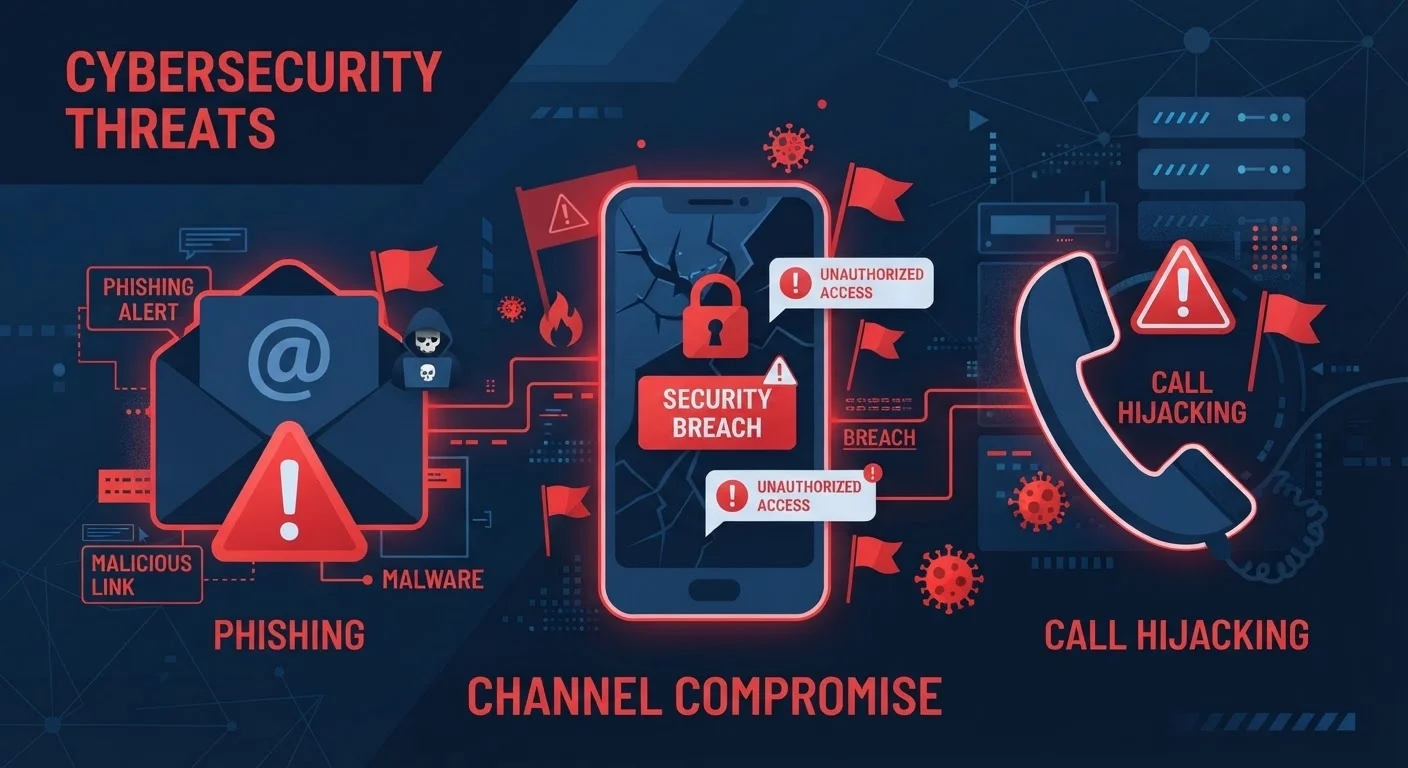
Three Channels, One Goal: Your Information
Scammers are opportunists. They use whichever communication channel gives them the best shot at catching you off guard - and that means email, text messages, and phone calls are all in play. The three primary attack types have distinct names that reflect their delivery method:
Phishing
A fraudulent email designed to trick recipients into clicking malicious links, opening harmful attachments, or surrendering sensitive information. The term plays on "fishing" - casting wide nets hoping someone takes the bait.
Smishing
SMS-based phishing delivered via text message. Smishing exploits the immediacy and personal nature of texting to push recipients toward quick, unguarded responses.
Vishing
Voice phishing conducted over phone calls - either live or automated (robocalls). Criminals often impersonate government agencies, financial institutions, or tech companies.
Spear Phishing
A highly targeted form of phishing that uses personal information about the victim - gathered from social media or data breaches - to craft convincing, individualized messages.
Caller ID Spoofing
A technique that falsifies the phone number displayed on a recipient's caller ID, making a scam call appear to originate from a trusted or familiar number.
While the names differ, the underlying goal is identical: trick you into revealing sensitive information, clicking a malicious link, or transferring money. Understanding what each looks like in practice makes them far easier to recognize - and resist. If you're already aware that everyday digital habits can create vulnerabilities, recognizing these scam channels is a natural next step.
Phishing: The Email Threat That Never Went Away
Phishing arrives in your inbox disguised as a trusted sender - a bank, a government agency, a shipping company, or even a colleague. The message typically creates urgency: your account is locked, a package couldn't be delivered, a payment failed. The goal is to get you to click a link or open an attachment before you stop to think.
| Most common phishing target | Financial institutions and payment services (Anti-Phishing Working Group (APWG)) |
| Typical smishing lure | Package delivery or bank fraud alert (FTC Consumer Sentinel Network) |
| Vishing hallmark tactic | Demand for gift card payment (FTC, ongoing consumer reports) |
| Reporting agency (US) | Federal Trade Commission - reportfraud.ftc.gov |
| Hover-before-clicking rule | Always verify a URL before clicking a link in any message |
Red flags to watch for:
- The sender's email address doesn't match the organization's official domain (e.g.,
support@amaz0n-secure.netinstead ofamazon.com) - Generic greetings like "Dear Customer" rather than your name
- Urgent or threatening language demanding immediate action
- Links that display one URL but redirect to another when you hover over them
- Attachments you weren't expecting, especially
.zip,.exe, or.docmfiles
Spear phishing - a more targeted version - uses personal details gathered from social media or data breaches to make the message feel legitimate. These are harder to spot, which is why building consistent safety habits matters more than any single alert.
Smishing and Vishing: When Scams Go Mobile
Smishing (SMS phishing) exploits the casual trust most people extend to text messages. Common examples include fake package delivery notifications, bank fraud alerts, and bogus two-factor authentication requests. Because texts feel immediate and personal, many people respond before scrutinizing the source.
Vishing (voice phishing) involves a live or automated call. Callers may impersonate the IRS, Social Security Administration, Medicare, tech support, or a bank's fraud department. They often already know partial details about you - your name, zip code, or the last four digits of your account - making the call feel credible.
Smishing red flags:
- Short links (like
bit.ly) from unknown numbers - Requests to confirm or update account info via a link
- Messages claiming a prize or reward requiring immediate action
Vishing red flags:
- Unsolicited calls demanding immediate payment - especially gift cards or wire transfers
- Callers who refuse to let you hang up and call back on an official number
- Pressure tactics paired with threats of arrest, account closure, or legal action
Travelers are especially exposed: using unfamiliar networks abroad can increase your vulnerability. See our guidance on protecting your devices and data while traveling for channel-specific precautions on the road.
What to Do When You Suspect a Scam
Recognition is only half the battle. Having a clear response plan keeps a moment of doubt from turning into a serious compromise.
- Don't engage. Hang up, close the message, or delete the email without clicking anything.
- Verify independently. If the message claims to be from your bank, call the number on the back of your card - not any number provided in the message.
- Report it. Forward phishing emails to the Anti-Phishing Working Group at
reportphishing@apwg.org. Report smishing and vishing to the FTC atreportfraud.ftc.gov. - Check your accounts. If you clicked a link or provided any information, monitor your financial accounts and consider a credit freeze. Scams across these channels frequently lead to identity theft or account takeover - two related but distinct harms worth understanding.
No Legitimate Organization Demands Immediate Payment
Government agencies - including the IRS and Social Security Administration - do not call, text, or email demanding immediate payment via gift cards, wire transfers, or cryptocurrency. Banks will never ask for your full account password over the phone or through an unsolicited link. If a communication creates extreme urgency and demands an unusual payment method, treat it as a scam until proven otherwise.
The content on this site is provided for informational purposes only and should not be considered a substitute for professional advice. While we strive to provide accurate and up-to-date information, we make no guarantees regarding its completeness or accuracy. Always consult a qualified professional for advice specific to your circumstances before making any decisions.