

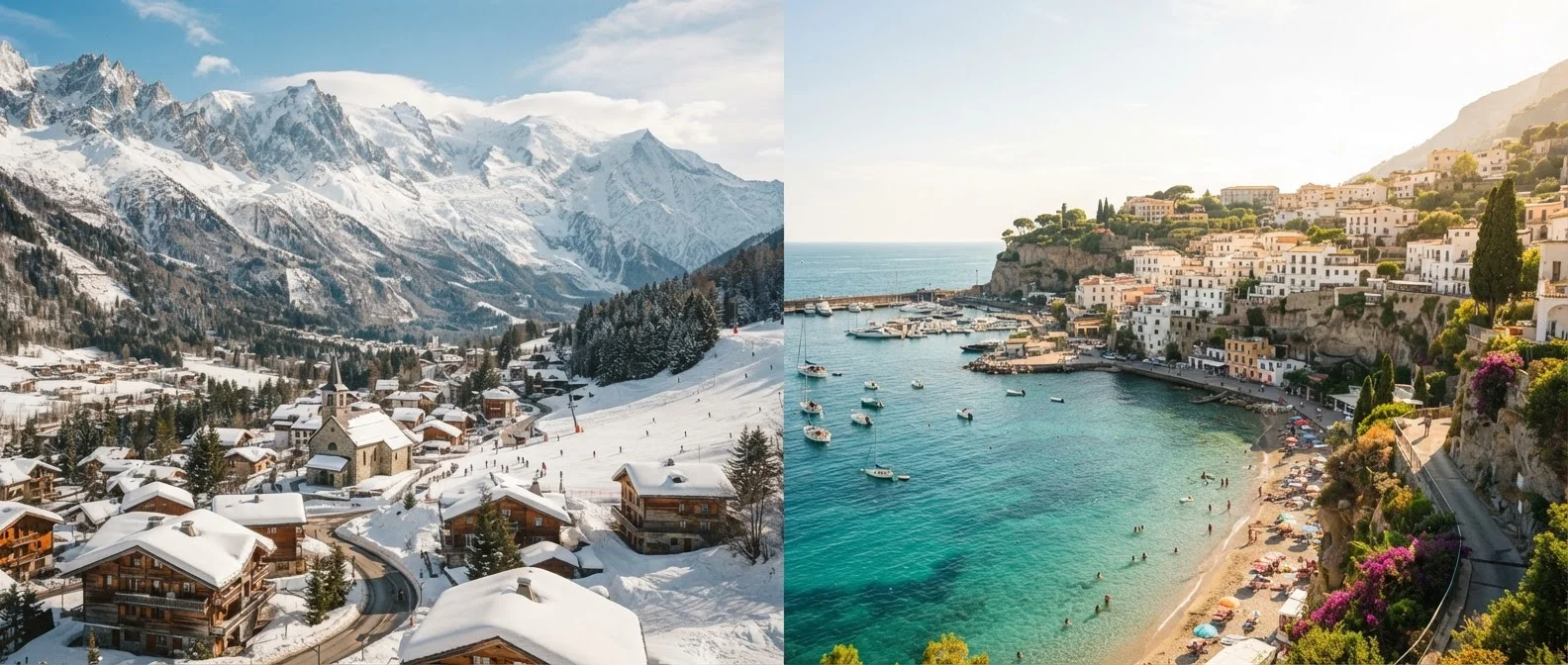
Our Verdict
Mountain and beach towns each serve distinct traveler needs and no single type of destination wins outright. The right choice depends on your preferred pace, activities, weather tolerance, and when you plan to travel. Both settings have budget-friendly and premium options, so cost alone rarely settles the decision.
| Best for | Recommended |
|---|---|
| Those seeking cool weather, hiking, and quieter surroundings | Mountain Towns |
| Families prioritizing swimming, water sports, and lively atmospheres | Beach Towns |
| Travelers visiting during summer who want to avoid heat and crowds | Mountain Towns |
| Winter sun-seekers and those wanting year-round warm weather | Beach Towns |
What Actually Separates These Two Destination Types
When Americans picture a getaway, the mental image usually falls into one of two categories: a charming mountain town ringed by trails and pine trees, or a coastal community where the day revolves around the water. Both archetypes are real, but the practical differences between them go well beyond scenery.
Mountain towns - think places in the Rockies, Appalachians, or Sierra Nevada - tend to be smaller, more insular, and organized around outdoor recreation and seasonal tourism. Beach towns range from quiet Gulf Coast villages to crowded Atlantic boardwalks, but nearly all share an outward-facing, activity-dense character shaped by warm weather and water access.
Understanding how these differences play out in cost, pace, weather, and available activities helps you choose the setting that fits your trip - not just the one that looks good in photos. If you're still figuring out how you'll get there, how you structure your travel - driving versus flying - also changes the planning math considerably.
Cost and Accommodation Realities
Neither mountain nor beach destinations are categorically more expensive, but each has its own pricing patterns worth understanding before you book.
Mountain towns often charge a premium during ski season (roughly December through March) and again during peak summer hiking months (July and August). Shoulder seasons - spring and fall - frequently offer the same scenery at meaningfully lower nightly rates. Many mountain communities have limited lodging inventory, which drives up prices when demand spikes.
Overnight lodging options near mountain destinations often include campgrounds and cabin rentals that don't exist in most beach settings, which can lower the floor on what you spend.
Beach towns spike hardest in summer - particularly around Fourth of July and school vacation weeks - and many popular coastal destinations remain pricey well into September. However, beach towns in the South and along the Gulf Coast can be remarkably affordable outside of their peak windows, and some communities offer a much wider range of accommodation types, from beachfront hotels to inland rental cottages a short drive from the water.
| Mountain Towns | Beach Towns | |
|---|---|---|
| Peak Season | Winter (ski) and midsummer | Summer, especially July-August |
| Typical Weather Appeal | Cool summers, cold winters | Warm to hot most of year |
| Primary Activities | Hiking, skiing, fishing, cycling | Swimming, water sports, sunbathing |
| Evening Pace | Quieter, limited nightlife | More social, developed dining scene |
| Budget Floor | Lower with camping/cabins | Lower in off-season coastal towns |
| Best Shoulder Season | Spring and fall | Spring and early fall |
| Family-Friendliness | Strong for older kids and teens | Strong for all ages, especially young kids |
Activities, Pace, and Who Each Setting Suits
The activity question is often the fastest way to resolve the mountain-vs.-beach debate for a specific trip.
Mountain towns reward hikers, mountain bikers, anglers, skiers, and anyone who finds restorative value in forests and altitude. The pace is generally slower and more self-directed. Evenings in mountain towns tend to be quieter - a few restaurants, a local brewery, stargazing - which appeals to travelers seeking rest rather than stimulation. If you're drawn to lesser-explored terrain, national parks beyond the famous names are often anchored in mountain or canyon environments worth considering.
Beach towns are better suited to families with young children, travelers who want a mix of relaxation and social activity, and anyone for whom swimming or water sports are central to the trip. Popular coastal destinations tend to have more developed dining, nightlife, and entertainment infrastructure. The tradeoff is more noise, more people, and higher demand for parking and amenities during peak windows.
Pace is a real differentiator. Beach vacations often involve more daily logistics - sunscreen, towels, finding a good spot, timing meals around tides and heat. Mountain trips can be equally active, but the rhythm is different: a long morning hike followed by a quiet afternoon is a common structure that many travelers find easier to sustain over multiple days.
Use Activity Priorities as Your First Filter
Before comparing prices or locations, write down the two or three activities your group considers non-negotiable. If swimming makes the list, a landlocked mountain town won't deliver - no matter how scenic it is. If hiking is central, a flat beach destination may leave the most enthusiastic members of your group underwhelmed. Starting with activity requirements narrows the field quickly and reduces the chance of a mismatch between expectations and reality.
Seasonality: When You Go Changes Everything
Timing may matter more than destination type for many travelers. Both mountain and beach settings have seasons that work against visitors who don't plan carefully. For a thorough breakdown of what shoulder and off-season travel actually involves, seasonality should factor into every step of trip planning.
Mountain towns in summer offer cooler temperatures that genuinely appeal to travelers escaping lowland heat - elevations above 6,000 feet can be 20-30°F cooler than nearby flatlands on a hot day. However, afternoon thunderstorms are common at elevation from July through August, and some high-altitude trails remain snowy into June. Winter brings ski infrastructure but also road hazards, altitude-related health considerations, and dramatically reduced options for non-skiers.
Beach towns deal with hurricane season (June through November on the Atlantic and Gulf coasts), jellyfish cycles, and seaweed conditions that vary year to year. Spring and fall often deliver near-ideal conditions - warm water, lower crowds, and moderate prices - but travelers who need school-year schedules may not have that flexibility.
Neither type of destination is truly year-round for every traveler, and honest planning requires checking current conditions and official travel advisories rather than assuming a destination will be accessible as described. Always verify weather, road conditions, and any relevant safety information with official sources before traveling.
The content on this site is provided for informational purposes only and should not be considered a substitute for professional advice. While we strive to provide accurate and up-to-date information, we make no guarantees regarding its completeness or accuracy. Always consult a qualified professional for advice specific to your circumstances before making any decisions.