

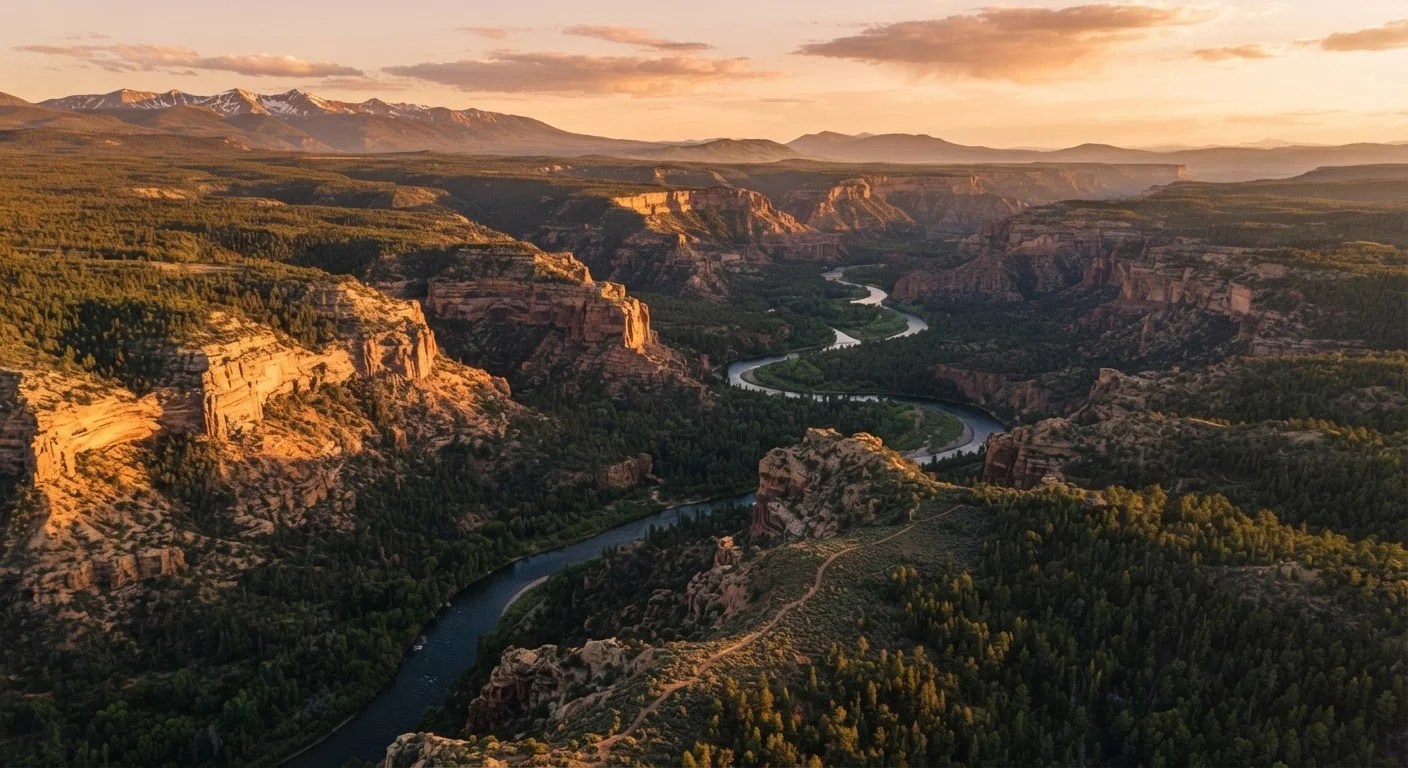
Why Look Beyond the Famous Parks
Yellowstone and the Grand Canyon earned their reputations - but that reputation comes with a cost. Summer crowds at both parks have grown significantly over the past decade, creating congestion at viewpoints, strained infrastructure, and reservation systems that book out months in advance. For travelers willing to explore the rest of the National Park Service's portfolio, the rewards are substantial: comparable geological drama, rich wildlife, and immersive wilderness, often with far more breathing room.
The parks below aren't obscure for lack of quality. Most are simply outpaced in marketing by their more famous counterparts. Before you finalize any trip, it's worth evaluating the destination honestly - crowd levels, seasonal access, and permit requirements all vary widely across the system. The NPS website is the authoritative source for current entry fees, road conditions, and reservation availability.
Great Basin National Park, Nevada
Located in eastern Nevada near the Utah border, Great Basin is one of the least-visited parks in the continental US - a fact that works strongly in the visitor's favor. The park contains Lehman Caves, a remarkably intact limestone cavern system accessible via ranger-led tours, along with Wheeler Peak, which rises to nearly 13,000 feet and supports one of the few ancient bristlecone pine groves accessible in the region. The high elevation also makes it one of the best places in the American West for dark-sky stargazing, having received official International Dark Sky Park designation.
There are no lodges inside the park, so most visitors camp or stay in the small town of Baker nearby. Road access is straightforward from US-50, sometimes called the Loneliest Road in America.
Great Basin offers caves, alpine peaks, and some of the darkest skies in the continental US.
Congaree National Park, South Carolina
Congaree protects the largest intact expanse of old-growth bottomland hardwood forest in the southeastern United States. The experience here is unlike any other park on this list - flat, humid, and cathedral-quiet, with massive loblolly pines and bald cypresses rising from a floodplain that fills seasonally with shallow water. Paddling a canoe through the flooded forest during high water is a genuinely singular experience.
The park is easily reached from Columbia, SC, and has no entry fee as of the time of writing, though visitors should confirm current fee structures with the NPS. Summers are hot and buggy; late fall through early spring offers more comfortable conditions for hiking the elevated boardwalk trails.
Congaree's old-growth floodplain forest offers a swamp-canoe experience found nowhere else in the park system.
North Cascades National Park, Washington
Washington State's Olympic and Rainier parks attract most of the regional attention, but North Cascades - often called the American Alps - contains arguably more dramatic mountain scenery than either. The park holds more glaciers than any other area in the contiguous US outside of Alaska, along with jagged peaks, turquoise glacier-fed lakes, and dense conifer forests. The North Cascades Highway (SR-20) provides access through the park corridor and is itself considered one of the most scenic drives in the country, though it closes seasonally in winter.
Backcountry camping here is genuinely remote and requires permits. Day visitors can access Ross Lake and the Diablo Lake overlook without deep backcountry commitment.
North Cascades contains more glaciers than anywhere else in the lower 48 states.
Isle Royale National Park, Michigan
Isle Royale is the only national park in the contiguous US that closes for winter, and the only one that requires a boat or floatplane to reach - factors that keep annual visitation among the lowest in the system. The island sits in Lake Superior and offers a wilderness experience defined by boreal forest, inland lakes, wolf and moose populations, and complete disconnection from roads and cell service. It is a park for people who want genuine remoteness, not scenic drives.
Access is via ferry from Houghton or Copper Harbor, Michigan, or Grand Portage, Minnesota. Trip planning requires significant advance logistics work, but the payoff for backpackers and kayakers is unmatched solitude in a striking Great Lakes environment.
Isle Royale's boat-access-only design makes it one of the most genuinely remote parks in the lower 48.
Guadalupe Mountains National Park, Texas
Adjacent to Carlsbad Caverns (itself undervisited) and located in far west Texas, Guadalupe Mountains contains the highest peak in Texas - Guadalupe Peak - along with a dramatic fossil reef from an ancient inland sea, one of the world's most extensive examples of such geology. The park sees relatively few visitors and has no paved roads beyond the parking areas, meaning the experience is almost entirely trail-based.
Fall foliage in McKittrick Canyon draws the most consistent seasonal attention, as the canyon's bigtooth maples and other deciduous trees create color that feels unexpected in a desert setting. Travelers exploring this corner of the country may also find value in our overview of the broader Southwest region when planning a multi-stop itinerary.
Guadalupe Mountains preserves one of the world's most extensive ancient fossil reef systems above ground.
Voyageurs National Park, Minnesota
Voyageurs is a water-based park - the only practical way to experience most of it is by motorboat, houseboat, or canoe. Straddling the Minnesota-Canada border, the park encompasses a network of interconnected lakes historically traveled by French-Canadian fur traders. Fishing, paddling, and wildlife watching (loons, bald eagles, black bears, and occasional wolves) are the primary activities, along with some of the best accessible northern lights viewing in the lower 48 during periods of high solar activity.
The park has limited road access; visitors typically launch from one of several gateway communities. It's a destination that suits travelers who don't need dramatic peaks or canyons and are happy to let the water set the pace - a useful contrast to consider alongside the question of what kind of landscape actually fits your travel style.
Voyageurs is a largely boat-access park offering genuine wilderness on Minnesota's border lakes.
Planning Your Visit
Each of these parks rewards some advance preparation. Shoulder seasons - spring and fall - typically offer the most favorable conditions at most of them, with milder temperatures and reduced visitor numbers. If you're combining multiple parks into a single trip, the American Southwest region in particular lends itself to efficient multi-park itineraries; our destination profile for the Southwest covers the regional geography and climate context useful for planning that kind of route.
Once you've chosen your destination, building a functional itinerary matters more than most travelers expect. Knowing which trailheads require timed-entry permits, where the nearest services are located, and how much drive time separates key sites can be the difference between a memorable trip and a frustrating one. Always confirm entry requirements and any reservation systems directly with the NPS before departing.
Check the America the Beautiful Pass
The NPS offers an annual America the Beautiful Interagency Pass that covers entrance fees at all federal lands, including national parks. If you're planning to visit more than two or three parks in a year, the math often favors purchasing one. Confirm current pass details and pricing at the official NPS or USGS recreation websites before your trip.
The content on this site is provided for informational purposes only and should not be considered a substitute for professional advice. While we strive to provide accurate and up-to-date information, we make no guarantees regarding its completeness or accuracy. Always consult a qualified professional for advice specific to your circumstances before making any decisions.