

Our Verdict
Portugal is compact enough to visit multiple regions in one trip, but each area rewards a different type of traveler. Understanding what each region actually feels like-not just what it looks like in photos-helps you build an itinerary that matches your pace and interests.
| Best for | Recommended |
|---|---|
| Urban explorers seeking food, history, and nightlife | Lisbon or Porto |
| Beach and warm-weather vacationers | The Algarve |
| Wine enthusiasts and scenic countryside travelers | The Douro Valley |
| Remote nature seekers and hikers | The Azores |
Lisbon and the Tagus Valley: Urban Energy with Historical Depth
Lisbon is Portugal's capital and its most internationally connected city, drawing visitors with its layered history, tiled building facades, and a restaurant scene that ranges from traditional tascas (casual neighborhood eateries) to experimental kitchens. The city sits on seven hills above the Tagus River estuary, giving it a dramatic topography that rewards wandering on foot-though those hills can be strenuous.
Beyond the city limits, the Sintra hills to the northwest offer forested estates and 19th-century palaces within 40 minutes by commuter rail. The Setúbal Peninsula to the south delivers quieter beaches and a nature reserve accessible on day trips. Lisbon's pace is decidedly urban: expect crowds at major sites, particularly from late spring through early fall. Travelers who want a more nuanced read on what city life here actually looks like will find this perspective on tourist impressions useful before visiting.
Porto and the North: Rain, Granite, and River Wine
Portugal's second city sits at the mouth of the Douro River and has a grittier, more industrial character than Lisbon-one that many visitors find more authentic. Its historic riverside district, the Ribeira, is a UNESCO World Heritage Site, and the wine cellars of Vila Nova de Gaia, just across the river, produce the fortified wine (port) for which the region is internationally known.
The broader northern region is wetter and greener than the south, with a Celtic cultural undercurrent reflected in folk music and stone architecture. The Minho subregion, bordering Spain's Galicia, produces vinho verde (young, slightly effervescent wine) and contains national parks with hiking trails. Travelers moving between northern Portugal and Spain by rail will find an honest overview of European train travel helpful for planning cross-border legs.
| Lisbon Area | Porto & North | Alentejo | Algarve | Douro Valley | Azores | |
|---|---|---|---|---|---|---|
| Landscape type | Urban hills, estuary | River city, green highlands | Plains, cork forests | Cliffs, beaches | Terraced river valley | Volcanic islands |
| Typical pace | Fast, cosmopolitan | Mid-pace, lived-in | Slow, rural | Resort-oriented | Leisurely, scenic | Outdoor-adventurous |
| Best season to visit | Spring, Fall | Spring, Summer | Spring, Fall | May-Jun, Sep | Sep-Oct, Spring | Year-round varies |
| Primary draw | History, food, culture | Port wine, architecture | Wine, quiet towns | Beaches, sun | Wine estates, scenery | Nature, hiking |
| Crowd level (peak) | Very high | High | Low-moderate | Very high | Moderate | Low-moderate |
| Getting around | Metro, tram, bus | Metro, bus, train | Car recommended | Car or bus | Car or river cruise | Car per island |
The Alentejo: Slow Travel Across Portugal's Interior Plains
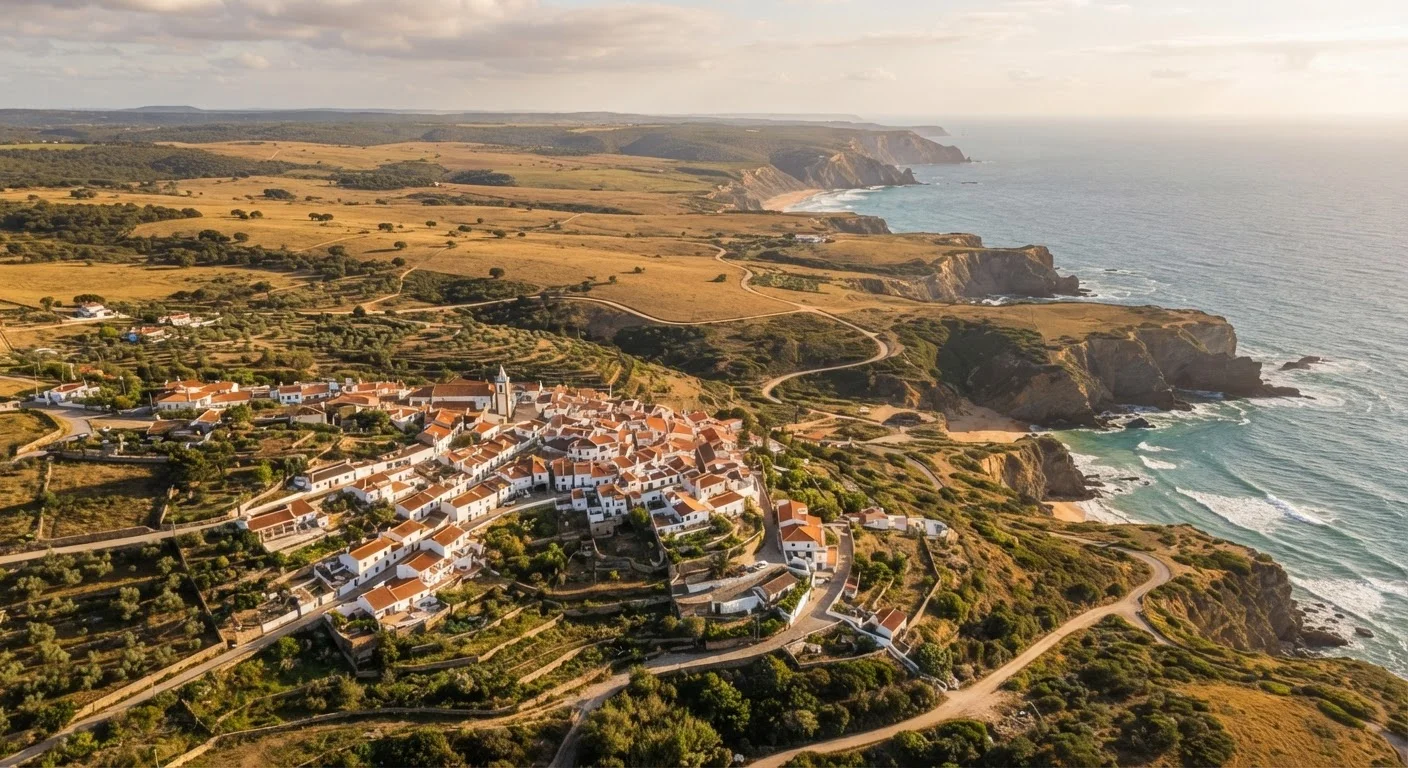
The Alentejo occupies roughly a third of Portugal's landmass but holds only about 7% of its population-a ratio that translates directly into the experience of being there. Cork oak forests, golden wheat fields, and white-walled hilltop towns define the landscape. The pace is unhurried in a way that feels deliberate rather than underdeveloped.
The region is increasingly recognized for its wine production, particularly full-bodied reds from the Alentejo DOC (Denominação de Origem Controlada, Portugal's wine classification system). Towns like Évora-a UNESCO World Heritage city with Roman ruins-and Monsaraz, perched above a reservoir near the Spanish border, give the region cultural anchors without the foot traffic of coastal destinations. Temperatures in summer are among the highest in Portugal, regularly exceeding 95°F (35°C), so timing matters.
The Algarve, the Douro Valley, and the Islands: Three Very Different Draws
The Algarve is Portugal's southernmost region and its most visited by international tourists. The coastline here is genuinely dramatic-sandstone cliffs, hidden coves, and Atlantic-facing beaches with warmer-than-average water temperatures for Western Europe. The interior Algarve, often overlooked, has traditional villages and a quieter rural character. Coastal towns get crowded in July and August; shoulder seasons (May, June, September) offer similar weather with fewer visitors.
The Douro Valley, a UNESCO World Heritage landscape east of Porto, is terraced with vineyards that descend steeply to the river. River cruises are a popular way to see it, though renting a car allows access to smaller quintas (wine estates) and viewpoints that boats don't reach. The valley is most visually striking during harvest (September-October) and spring flowering.
The Azores, an archipelago of nine volcanic islands roughly 900 miles west of Lisbon in the Atlantic, feel unlike anywhere else in Portugal. The landscape is shaped by calderas, crater lakes, hot springs, and endemic vegetation. São Miguel is the most visited island; Flores and Corvo are among the most remote in all of Europe. Flights from Lisbon are the primary access point, and inter-island connections vary significantly by season.
The content on this site is provided for informational purposes only and should not be considered a substitute for professional advice. While we strive to provide accurate and up-to-date information, we make no guarantees regarding its completeness or accuracy. Always consult a qualified professional for advice specific to your circumstances before making any decisions.