

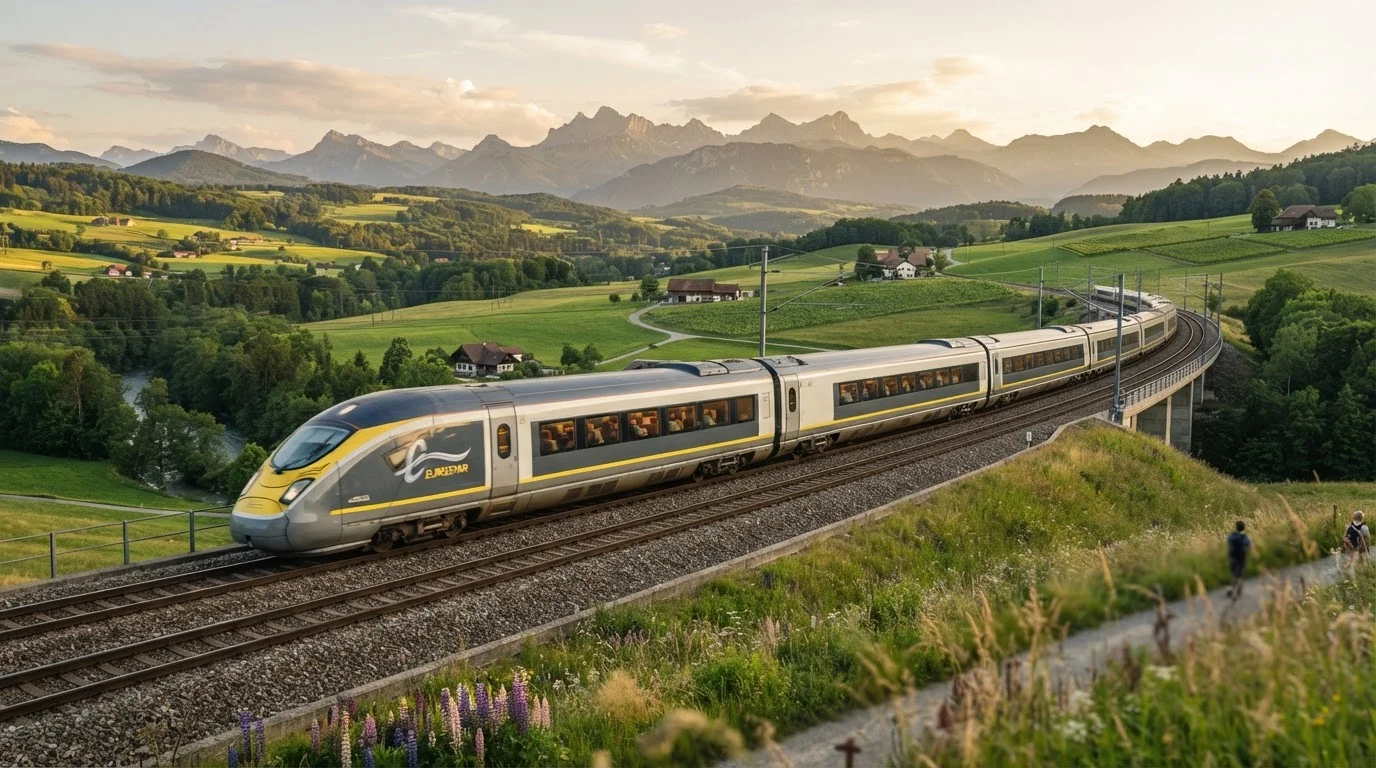
The Rail Network: What It Actually Covers
Europe's passenger rail network is one of the most extensive in the world, connecting major capitals, mid-size cities, and smaller regional towns across dozens of countries. High-speed lines link hubs like Paris, Amsterdam, Brussels, Frankfurt, and Zurich with travel times that often rival or beat short-haul flights once airport check-in and transit time are factored in.
That said, the network is not a single unified system. It's a patchwork of national operators, each with its own booking platform, pricing logic, and service standards. A journey from Lisbon to Copenhagen, for instance, might involve three or four separate operators and require independent bookings for each segment. Understanding this fragmentation is the first step toward planning a realistic itinerary.
Regional coverage varies sharply. Western Europe-France, Germany, the Netherlands, Switzerland, Austria, Italy-offers dense, frequent service. The further east or south you travel, the more you'll encounter older rolling stock, longer journey times, and sparser schedules. Portugal's regional rail, for example, is useful for reaching Lisbon and Porto but less practical for exploring interior areas like the Alentejo.
Tickets vs. Rail Passes: An Honest Comparison
Rail passes-sold by programs like Eurail for non-European residents-offer a set number of travel days within a window of time and can cover multiple countries. They appeal to travelers who want scheduling flexibility and plan to cover significant ground. The catch: many high-speed and cross-border trains require a separate seat reservation fee on top of the pass, which can add up quickly.
Point-to-point tickets, booked directly through national rail operators or aggregator platforms, are often cheaper for travelers with a fixed itinerary. Booking six to eight weeks ahead on routes like Paris-London or Rome-Milan can yield fares significantly lower than the walk-up price. Flash sales and advance pricing tiers exist across most major operators.
~33,000
Miles of high-speed rail in Europe
Europe operates one of the world's largest high-speed rail networks, with lines spanning from the Iberian Peninsula to Scandinavia and Eastern Europe.
2h15m
Paris to London by Eurostar
The Eurostar channel tunnel service connects central Paris and central London faster than most travelers can complete the full door-to-door journey by air.
40+
Countries covered by Eurail network
The Eurail pass program covers rail travel across more than 40 European countries, though service frequency and quality vary significantly by region.
A practical approach for many American travelers: use point-to-point tickets for the confirmed legs of a trip, and consider a limited-day pass only if planning several spontaneous journeys within a single country or region. For general trip planning assumptions worth questioning, the idea that passes always save money is near the top of the list.
Overnight Trains: What No One Tells You
Overnight trains have made a significant comeback across Europe, with routes expanding between cities like Vienna, Brussels, Rome, and Amsterdam. For travelers trying to make the most of limited time, sleeping on a train while crossing a border is genuinely efficient-you arrive in a new city at dawn without losing a day or paying for a hotel night.
The reality of the experience depends heavily on your accommodation choice. A reclining seat in an open car is the cheapest option but the least comfortable for actual sleep. A couchette-a fold-out bunk in a shared compartment of four to six people-is a reasonable middle ground. A private sleeper cabin offers the most comfort but comes at a premium price.
Noise, temperature inconsistency, and early-morning arrivals are common realities. Trains typically arrive at terminus stations between 6 and 8 a.m., meaning you may be waiting at a station with luggage before hotels allow check-in. Pack light, secure your belongings, and manage expectations: overnight rail is practical and often enjoyable, but not equivalent to a hotel stay. For travelers going it alone, see our guide to solo travel expectations for relevant safety and logistics advice.
Navigating Stations, Platforms, and Transfers
Major European rail hubs-Paris Gare du Nord, Amsterdam Centraal, Milan Centrale-can be large and complex. Platform assignments are often posted 10-20 minutes before departure, not in advance, which means waiting near the departures board with luggage rather than settling on a platform. This is normal, not a problem, once you expect it.
For cross-border trains that include passport checks-most notably Eurostar between London and Paris or Brussels-you'll pass through border control before boarding. Arrive at least 30-45 minutes early for these services. Missing a reserved train in Europe almost always means buying a new ticket; most operators do not allow free rebooking for missed departures.
Connection times matter more on regional routes. A 10-minute transfer between two intercity trains at a major hub is usually manageable. A 10-minute transfer between a regional train and a high-speed departure at an unfamiliar mid-size station is risky. Build in buffer time, especially if your onward journey involves a non-refundable reservation. Managing money across borders is also relevant here-understanding what currency and payment methods work at ticket windows and kiosks in different countries saves time and frustration.
Traveling by train shapes how you experience Europe in ways that flying simply doesn't. Arrivals in city centers, views of changing landscapes, and the rhythm of station life all contribute to a fuller sense of the places you're passing through-something worth keeping in mind when comparing your options. Our piece on road trips versus fly-and-explore formats offers a useful frame for thinking through which approach fits your trip.
Frequently Asked Questions
It depends on how many countries you're visiting and how flexible your itinerary is. For travelers covering five or more countries over two to three weeks, a pass can offer good value. For shorter, more structured trips with fixed dates, individual point-to-point tickets often cost less. Always compare both options before purchasing.
On many high-speed routes and overnight trains, seat or couchette reservations are required regardless of whether you hold a pass or a ticket. Some routes sell out weeks ahead during peak season. Booking in advance is strongly recommended for popular corridors and any travel during summer or major holidays.
Overnight trains typically offer reclining seats, couchettes (shared bunk-style berths), and private sleeper compartments at varying price points. They're a practical way to cover long distances while sleeping, though noise, light, and comfort vary by route and operator. Bring earplugs and a travel pillow for a better experience.
Yes, rail connections exist between most neighboring European countries. However, not every border crossing has frequent service, and some cross-border routes require changes. Always check schedules in advance, particularly for travel to or through smaller countries or across the Balkans, where connections can be limited.
For regional and intercity trains, 10-15 minutes before departure is generally sufficient. For high-speed international trains-especially Eurostar-allow at least 30-45 minutes, as passport and security checks are required. Missing a reserved train typically means purchasing a new ticket, so err on the side of arriving early.
Generally, yes. Train stations and rail cars across Western and Northern Europe are considered safe for solo travelers. Standard precautions apply: keep valuables secure, be aware of your surroundings, and store luggage where you can see it. Overnight trains require extra mindfulness about personal belongings.
The content on this site is provided for informational purposes only and should not be considered a substitute for professional advice. While we strive to provide accurate and up-to-date information, we make no guarantees regarding its completeness or accuracy. Always consult a qualified professional for advice specific to your circumstances before making any decisions.