

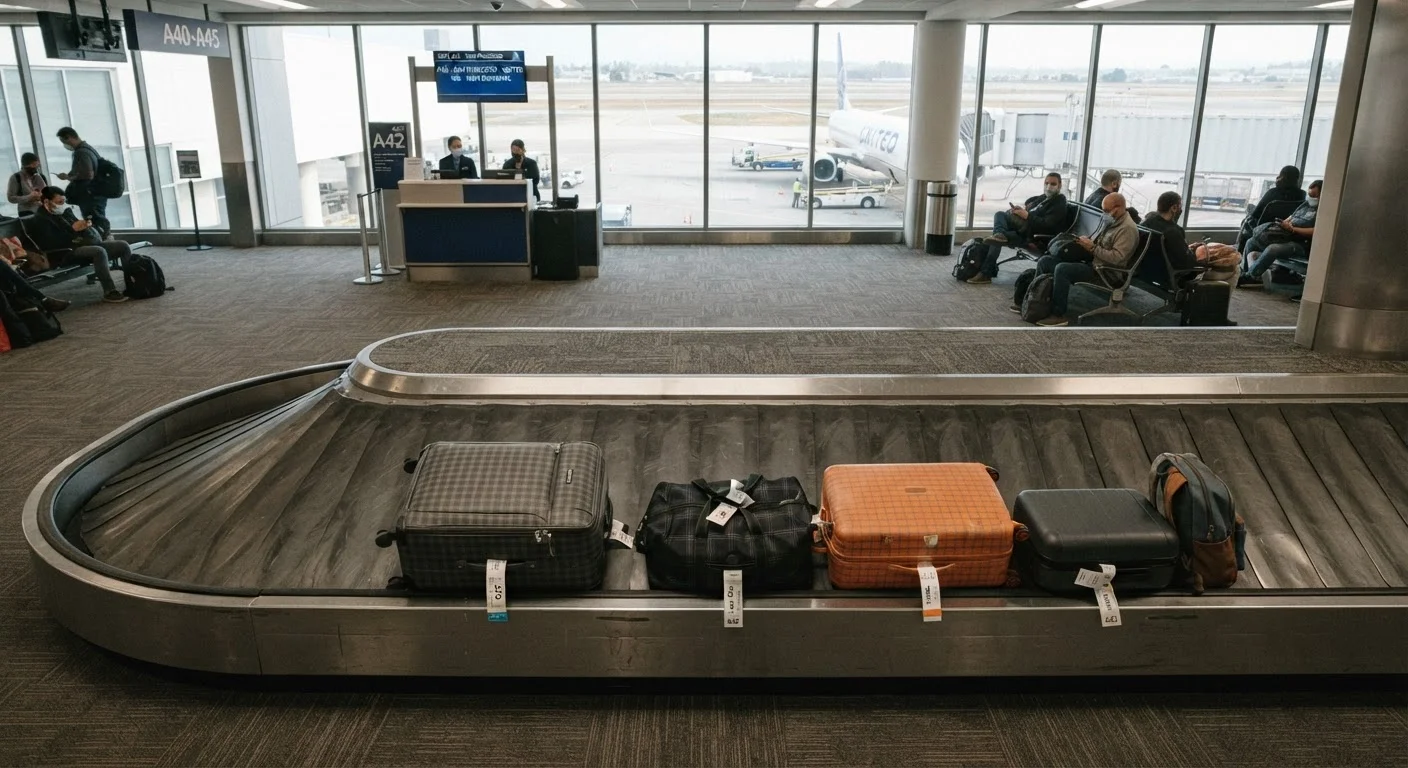
Our Verdict
Neither checked baggage nor carry-on only is universally superior-each involves real trade-offs in cost, convenience, and flexibility. Carry-on travel rewards those who can pack light and value speed; checked baggage suits travelers with longer trips, specific gear needs, or low tolerance for packing constraints. Understanding exactly what you're trading away with each choice helps you decide with clear eyes rather than habit.
Carry-on only is ideal for short-to-medium trips where travelers can pack efficiently, while checked baggage is better suited for extended travel, adventure gear, or journeys where packing flexibility matters more than fee savings.
The Fees Are Just the Beginning
Most travelers frame the checked-bag debate around money-and fees are real. On major U.S. carriers, a first checked bag typically costs $30-$40 each way, meaning a round trip can add $60-$80 before you've booked a hotel. On a multi-leg itinerary, those numbers compound quickly.
But the financial picture is more nuanced than a fee schedule suggests. Some airline credit cards waive the first checked bag for the primary cardholder and companions on the same reservation. Travelers who fly one airline consistently may already be absorbing this cost without realizing it-or avoiding it through status perks. Before assuming carry-on is cheaper, verify what your specific ticket and card benefits actually cover.
Carry-on travel isn't entirely free either. Investing in a quality carry-on bag sized to airline specifications, packing cubes, and travel-size toiletries is a real upfront cost. And on budget carriers-where even carry-on bags can trigger fees-the math shifts again. Always check the specific airline's baggage policy before you assume anything. For a broader look at how airline choice intersects with trip costs, see our piece on flying vs. driving for long domestic trips.
$30-$40
Typical first checked bag fee each way
Most major U.S. network carriers charge in this range per checked bag per direction, based on publicly posted fee schedules.
2.9M+
Mishandled bags reported in the U.S. annually
The U.S. Department of Transportation tracks mishandled baggage reports; while rates have improved, millions of bags are still delayed, damaged, or lost each year.
Time and Stress: Where Carry-On Wins Clearly
The clearest advantage of carry-on travel isn't savings-it's time. Skipping the check-in bag drop, bypassing baggage claim entirely, and walking straight to ground transportation can save 30-60 minutes on a typical domestic trip. On tight connections or late arrivals, that window matters enormously.
Carry-on travelers also eliminate one of the most frustrating travel risks: delayed or lost luggage. U.S. airlines are required to compensate passengers for verifiably lost bags, but the process takes time, documentation, and follow-up-none of which you want at the start of a trip. Keeping your belongings in the cabin means they stay with you.
That said, carry-on travel creates its own stress at the airport. Overhead bin space is finite and filled on a first-come basis. Gate agents on full flights sometimes force carry-ons to be checked at the last moment-for free, usually, but not always, and always at an inconvenient time. Boarding later in a group sequence makes this more likely. See our guide to airport security for how boarding position and TSA prep can affect the carry-on experience.
Packing Freedom vs. Packing Discipline
Checked baggage gives you room-for shoes that won't compress, liquids in full-size containers, specialty gear, and clothing for unpredictable weather. For trips longer than five to seven days, international itineraries with formal events, or travel involving sports equipment, a checked bag often removes genuine logistical headaches.
Carry-on travel, by contrast, demands real packing discipline. The TSA's 3-1-1 liquids rule restricts containers to 3.4 oz (100 ml), all fitting in a single quart-size bag-which catches many travelers off guard when it comes to skincare, medications in liquid form, or toiletries bought in bulk. Planning around this constraint takes effort and practice.
No overhead bin stress or last-minute gate checks
Carry-on travelers who check their bag are free of the scramble for limited bin space. Your bag is tracked by the airline and loaded regardless of boarding position.
Pack freely without liquid or size restrictions
Checked bags allow full-size toiletries, sporting equipment, and bulkier clothing-essential for trips where packing constraints would require expensive purchases at the destination.
Ideal for longer trips or unpredictable itineraries
When travel spans multiple climates, formal events, or outdoor activities, a checked bag removes the mental load of constant outfit calculation and repacking.
Carry-on only eliminates baggage claim entirely
Walking off the plane and directly to transportation saves meaningful time-often 30-60 minutes on domestic routes-and removes the risk of delayed or misdirected luggage.
Carry-on keeps valuables and essentials with you
Electronics, medications, travel documents, and irreplaceable items remain in your control throughout the flight-a significant practical and security advantage.
Checked bag fees add up on round trips and families
At $30-$40 per bag each way on most major U.S. carriers, a family of four checking bags can pay hundreds of dollars extra per trip before any other expenses.
Risk of delayed, damaged, or lost luggage
While rare, mishandled bags cause real disruption. Arriving at a destination without clothing or gear while a claim is processed is a stressful and time-consuming experience.
Baggage claim adds time at both ends of the trip
Waiting at the carousel-sometimes 20-40 minutes on busy routes-eats into arrival-day plans and extends the overall door-to-door travel time meaningfully.
Carry-on only demands strict packing discipline
The TSA 3-1-1 liquids rule and size limits require deliberate planning. Travelers who haven't practiced packing light often find the constraints frustrating or impractical.
Overhead bin space is not guaranteed
On full flights, passengers boarding in later groups may have their carry-on checked at the gate-sometimes to the destination, sometimes only to the connecting city-disrupting their plan entirely.
The good news is that packing well is a learnable skill. Packing decisions that make or break a trip covers the principles behind choosing what to bring and what to leave behind, and packing for a two-week trip in a carry-on walks through a practical approach to fitting more than you'd expect into a single bag.
The Middle Ground Most Travelers Miss
The choice isn't always binary. Many travelers do well with a hybrid approach: a personal item (under-seat bag, backpack, or tote) that stays accessible during the flight, combined with a single checked bag when the trip genuinely calls for one. This avoids the overhead bin competition while still keeping essentials-medication, electronics, valuables-in the cabin where you control them.
It's also worth questioning the assumption that carry-on is always the sophisticated traveler's move. Experienced frequent flyers sometimes check bags deliberately on longer trips simply because the freedom is worth the fee. Conversely, the belief that checked baggage is safer because it's out of sight ignores that theft from checked bags-while uncommon-does occur, and items packed in checked luggage are generally not covered by airlines if missing without proof of tamper.
What Airlines Actually Cover for Lost Bags
U.S. airlines are required by the Department of Transportation to compensate passengers for bags that are verifiably lost, damaged, or delayed. For domestic flights, liability is capped at $3,800 per passenger as of recent DOT guidelines. However, airlines often exclude certain high-value items-electronics, jewelry, cash-from coverage. Always verify the specific policy with your carrier, and consider whether travel insurance fills any remaining gap. Check official DOT and airline sources for current figures before traveling.
The honest framework: carry-on only rewards those who are willing to plan, pack light, and absorb some airport-floor uncertainty. Checked baggage rewards those who want to pack freely and can absorb the fees and wait. Neither choice is wrong-but choosing without understanding the full trade-off means you'll be surprised by the downsides every time. For more on assumptions that distort trip planning, see trip planning myths that lead travelers astray.
The content on this site is provided for informational purposes only and should not be considered a substitute for professional advice. While we strive to provide accurate and up-to-date information, we make no guarantees regarding its completeness or accuracy. Always consult a qualified professional for advice specific to your circumstances before making any decisions.