

Our Verdict
For short business trips or destinations where switching SIMs is impractical, a well-priced international roaming plan provides acceptable convenience. For leisure travelers staying a week or more, a local SIM almost always delivers substantially more data and talk time for the money. eSIM plans are increasingly worth considering if your device supports them.
| Best for | Recommended |
|---|---|
| Travelers on short trips of three days or fewer | International Roaming |
| Budget-conscious travelers staying a week or longer | Local SIM Card |
| Travelers with newer unlocked smartphones who want pre-trip setup | eSIM / International Data Plan |
| Those visiting multiple countries on one trip | International Roaming or Multi-Country eSIM |
The Core Difference Between Roaming and a Local SIM
When you travel internationally, your phone needs a way to connect to local cell towers. There are two primary approaches: international roaming, which lets your home carrier's service extend abroad (usually for an added fee), and purchasing a local SIM card from a carrier in the country you're visiting.
With roaming, your existing phone number works as normal - calls, texts, and data all flow through your U.S. carrier, which negotiates access with foreign networks. The tradeoff is cost: roaming charges and daily plan fees can add up quickly, particularly for data.
A local SIM replaces your home carrier connection entirely while you're abroad. You get a temporary local number and access to that country's network at domestic rates. The main requirement is that your phone must be unlocked - meaning it isn't restricted to a single carrier's network. Check with your home carrier before traveling if you're unsure of your phone's status.
For a broader look at managing your finances while abroad, see our guide to managing money across borders.
International Roaming: Convenience at a Cost
Most major U.S. carriers offer international roaming packages - typically a flat daily fee that activates automatically when your phone connects to a foreign network. These plans are straightforward: you keep your number, your contacts can reach you the same way, and setup requires little effort before departure.
However, roaming plans vary considerably in what they include. Some offer unlimited data at reduced speeds (often throttled after a modest threshold), while others charge per megabyte, which can become very expensive for streaming or GPS navigation. Voice calls made through roaming also tend to cost more than equivalent data usage.
Roaming makes the most practical sense when:
- Your trip is three days or fewer and the per-day fee is manageable.
- You're visiting multiple countries and don't want to swap SIMs at each border.
- Your employer covers the cost for a business trip.
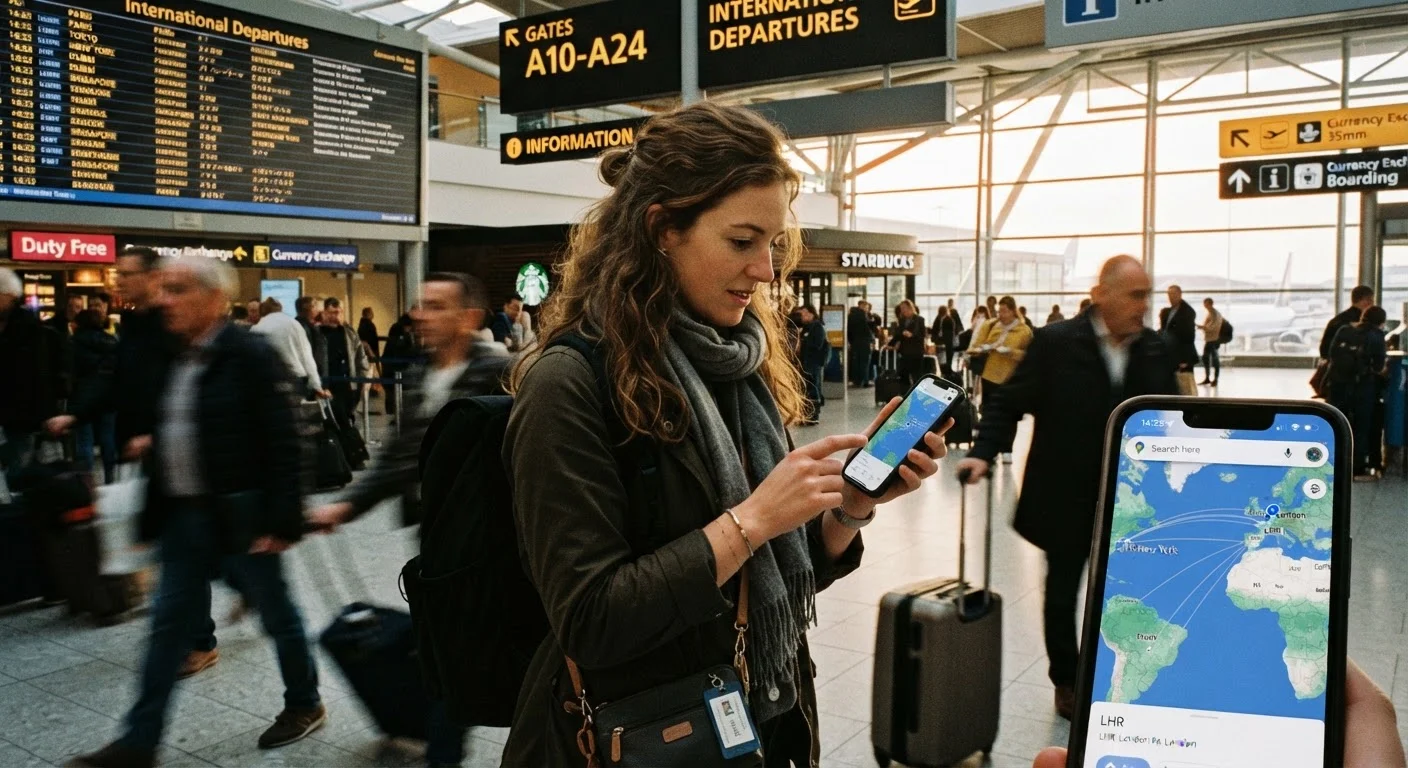
- Arriving at an unfamiliar airport and needing immediate connectivity without a detour to a phone shop.
| International Roaming | Local SIM Card | eSIM Plan | |
|---|---|---|---|
| Setup effort | Minimal - often auto-activates | Moderate - buy and swap in-country | Low - activate before departure via app |
| Keeps U.S. number active | Yes | No - temporary local number | Data-only plans typically do not |
| Typical cost for data | Higher - daily fees or per-MB rates | Lower - local domestic rates | Moderate - varies by provider |
| Phone unlock required | No | Yes | Yes (and eSIM-compatible device) |
| Multi-country coverage | Generally seamless | Requires new SIM per country | Some plans cover multiple countries |
| Best trip length | 1-3 days | 5+ days in one country | Flexible - any length |
Local SIM Cards: Better Value, More Effort
Purchasing a SIM card from a local carrier in your destination country generally gives you access to competitive domestic data rates, often dramatically cheaper than roaming. In many countries - across Europe, Southeast Asia, and Latin America - prepaid SIM cards with generous data allowances are available at airports, convenience stores, and electronics shops for the equivalent of a few U.S. dollars.
The setup process requires a few minutes to swap the card and configure your phone's APN (Access Point Name) settings, which the carrier's instructions typically walk you through. You'll receive a local phone number, which means your U.S. number won't receive calls during your trip unless you use a forwarding or VoIP app.
Key considerations before buying a local SIM:
- Phone unlock status: Confirm your device is unlocked before you leave home.
- Passport requirement: Some countries require identification to register a prepaid SIM - carry your passport.
- Coverage maps: Check whether the local carrier covers rural areas you plan to visit, not just major cities.
- Data caps and speeds: Understand what happens after your data allowance is exhausted - unlimited throttled plans are common.
Protecting your device while traveling matters as much as staying connected. Review how to keep your devices and data safe while traveling before your trip.
eSIM: A Third Path Worth Knowing
Many recent smartphones support eSIM technology - a digital SIM embedded in the phone that can be programmed with a carrier plan without physically swapping a card. Several international data services now sell eSIM plans that you activate through an app before departure, giving you a local or regional data connection the moment you land.
eSIM plans occupy a middle ground: more affordable than traditional roaming and easier to set up than hunting for a physical SIM card at your destination. The limitation is that eSIM support varies by phone model and carrier, and some eSIM data-only plans don't include a local phone number for calls.
Check Your Phone's eSIM Compatibility Early
Not all phones support eSIM, and even among those that do, carrier restrictions can limit which eSIM providers you can use. Check your phone's settings or manufacturer specifications well before your departure date. If your phone doesn't support eSIM, a physical local SIM is your best alternative to standard roaming.
If your device supports dual SIM (a physical SIM and an eSIM simultaneously), you can keep your U.S. number active for incoming calls while using an eSIM data plan abroad - a practical setup for travelers who need both.
Making the Right Choice for Your Trip
No single option fits every traveler or every trip. Work through these questions before deciding:
- How long is the trip? Longer stays favor local SIMs; short trips may not justify the setup time.
- How many countries? Multi-country itineraries complicate local SIM logistics; roaming or a multi-country eSIM plan is simpler.
- How much data will you use? Heavy navigation, streaming, or remote work tilts the math toward local SIMs or eSIM plans with higher data limits.
- Is your phone unlocked? Locked phones eliminate the local SIM option unless you get it unlocked before departure.
- What does your carrier actually charge? Read the fine print on roaming plans - some are genuinely competitive for short trips.
Whatever you choose, avoid relying solely on hotel Wi-Fi or public networks as your primary connection. Public Wi-Fi carries real security risks; understanding those risks is part of smart trip planning. See our online safety resources for practical guidance.
Taking the time to compare your options before you board your flight is a small investment that pays off in both cost savings and peace of mind once you're on the road.
The content on this site is provided for informational purposes only and should not be considered a substitute for professional advice. While we strive to provide accurate and up-to-date information, we make no guarantees regarding its completeness or accuracy. Always consult a qualified professional for advice specific to your circumstances before making any decisions.