

Why Watering Myths Persist
Gardening advice passes from neighbor to neighbor, generation to generation - and a surprising amount of it is wrong. When plants struggle or die, it's tempting to add more water or stick to a rigid routine because it feels productive. The problem is that many of the most widely repeated watering beliefs are based on intuition rather than how plants actually function.
Understanding what your plants genuinely need - and why certain habits quietly harm them - is one of the most useful things a home gardener can learn. If you're just getting started, our guide on soil, sunlight, and water fundamentals lays the essential groundwork before you plant anything.
Myth
Plants need to be watered every day to stay healthy.
Fact
Most plants do best with deep, infrequent watering rather than a daily sprinkle.
Daily watering keeps only the top inch or two of soil moist, which trains roots to stay shallow. Shallow roots make plants less stable and more vulnerable to drought. Most garden plants and shrubs benefit from thorough watering every few days - or less - depending on rainfall, soil type, and temperature. Let the soil, not the calendar, guide your schedule.
Myth
Misting or spraying leaves gives plants extra hydration.
Fact
Plants absorb water almost entirely through their roots, not their leaves.
Leaf surfaces have a waxy cuticle designed to limit water loss, not intake. Misting provides negligible hydration and, in outdoor gardens, can promote fungal diseases like powdery mildew by leaving foliage wet for extended periods. For tropical houseplants that benefit from humidity, a humidifier or pebble tray is more effective than misting.
Myth
If a plant is wilting, it needs water right away.
Fact
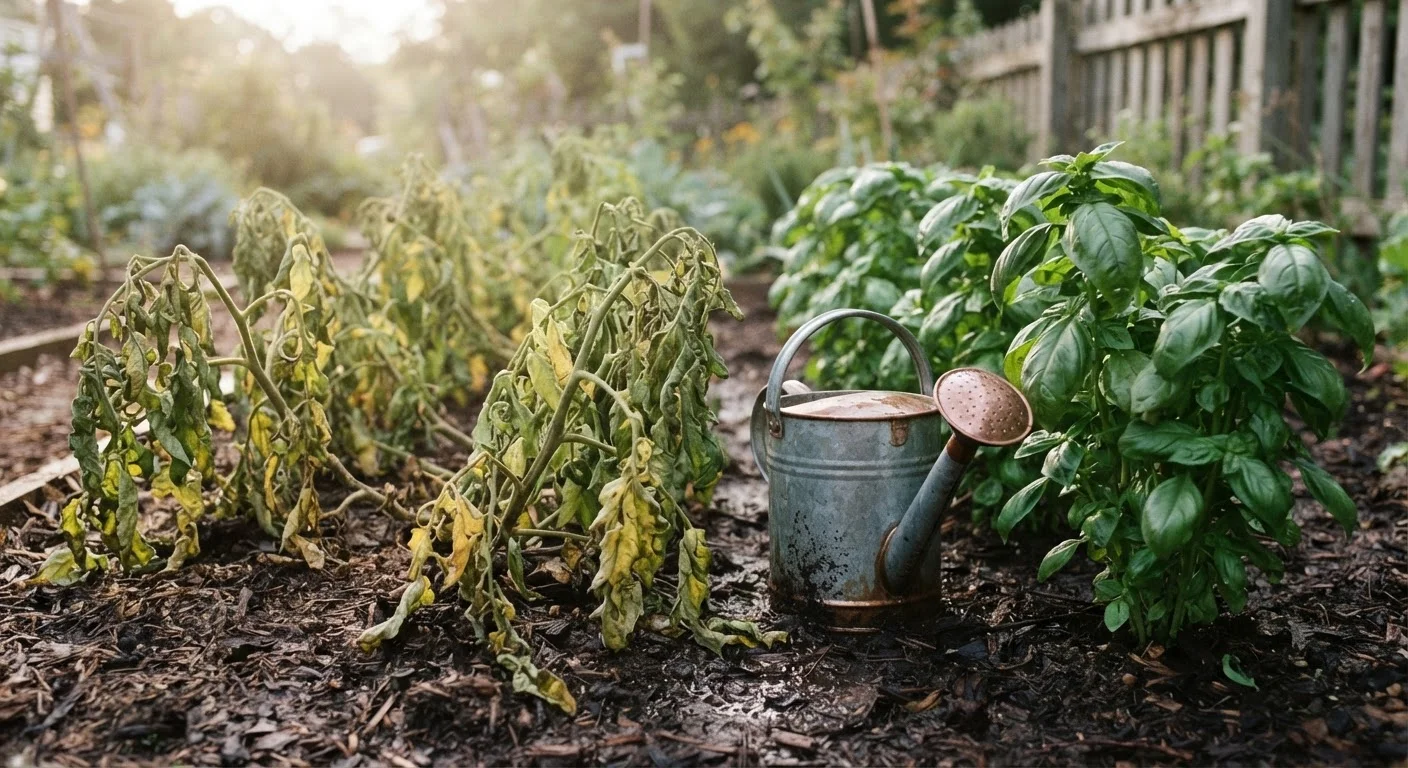
Wilting can signal overwatering, heat stress, or root problems just as often as drought.
Some plants wilt during peak afternoon heat as a normal protective response - they often recover by evening without any additional water. Chronically overwatered plants also wilt because waterlogged roots cannot deliver oxygen or nutrients effectively. Before reaching for the hose, check soil moisture first. If the soil is wet and the plant is wilting, more water will worsen the problem.
Myth
More water always helps a struggling plant recover.
Fact
Overwatering is one of the leading causes of plant death, both indoors and in the garden.
When soil stays saturated, air pockets in the root zone fill with water. Roots need oxygen to function; without it they suffocate and begin to rot. Root rot is often irreversible and difficult to detect until visible symptoms appear above soil. Signs of overwatering include yellowing leaves, mushy stems near the base, and a sour or earthy smell from the soil. When in doubt, err toward underwatering - most plants can recover from drought stress more easily than from root rot.
Myth
Watering in the heat of the day will scorch or burn plant leaves.
Fact
Water droplets on leaves do not magnify sunlight enough to burn foliage under normal conditions.
This is a widely repeated myth, but research does not support it under typical outdoor conditions. The real reason to avoid midday watering is efficiency: water evaporates much faster in heat, so less of it actually reaches the roots. Morning watering remains the best practice for plant health and water conservation - but not because afternoon watering burns leaves.
Myth
Newly planted trees and shrubs establish quickly and need little water.
Fact
Newly planted trees and shrubs require consistent, attentive watering for at least the first growing season.
When a tree or shrub is transplanted, it loses a significant portion of its root system. The plant must regrow those roots in its new location before it can efficiently pull water from surrounding soil. During this establishment period - typically one to two growing seasons depending on plant size - regular deep watering at the root ball is critical. Neglecting newly planted trees is a primary reason they decline or die within the first year.
Smarter Watering Habits That Actually Work
Correcting watering myths is only useful if it leads to better practices. The most reliable approach is learning to read your soil and plants rather than following a preset calendar. Push a finger two inches into the soil near the plant's base - if it feels dry, water deeply. If it's still moist, wait.
~50%
Outdoor residential water used for landscaping
The U.S. Environmental Protection Agency estimates that roughly half of residential outdoor water use goes to landscape irrigation, much of it applied inefficiently.
50%+
Landscape water lost to evaporation or runoff
According to EPA WaterSense program data, more than half of irrigation water is wasted through overwatering, evaporation, wind, and runoff - often driven by poor timing and scheduling habits.
When you do water, focus on the root zone. Slow, deep watering - whether from a soaker hose, drip line, or careful hand-watering at soil level - allows moisture to penetrate 6 to 8 inches down, which is where most feeder roots live. This encourages roots to grow downward in search of water, making plants more drought-resilient over time. Watering in the morning is generally ideal: the soil absorbs moisture before midday heat, and any incidental splash on leaves dries quickly.
Pairing better watering technique with a 2-3 inch layer of mulch over your beds dramatically reduces how often you need to water at all, by slowing evaporation from the soil surface. For more low-effort practices that compound into a healthier garden, see habits experienced growers rely on all season. And if you've been struggling with seeds not sprouting, poor watering technique may be a factor - our article on why seeds fail to germinate covers exactly that.
Just as myths cluster in one area of home care, they tend to spread across others. If you find myth-busting useful, the same approach applies to common plumbing myths that homeowners repeat at their own expense.
The content on this site is provided for informational purposes only and should not be considered a substitute for professional advice. While we strive to provide accurate and up-to-date information, we make no guarantees regarding its completeness or accuracy. Always consult a qualified professional for advice specific to your circumstances before making any decisions.