

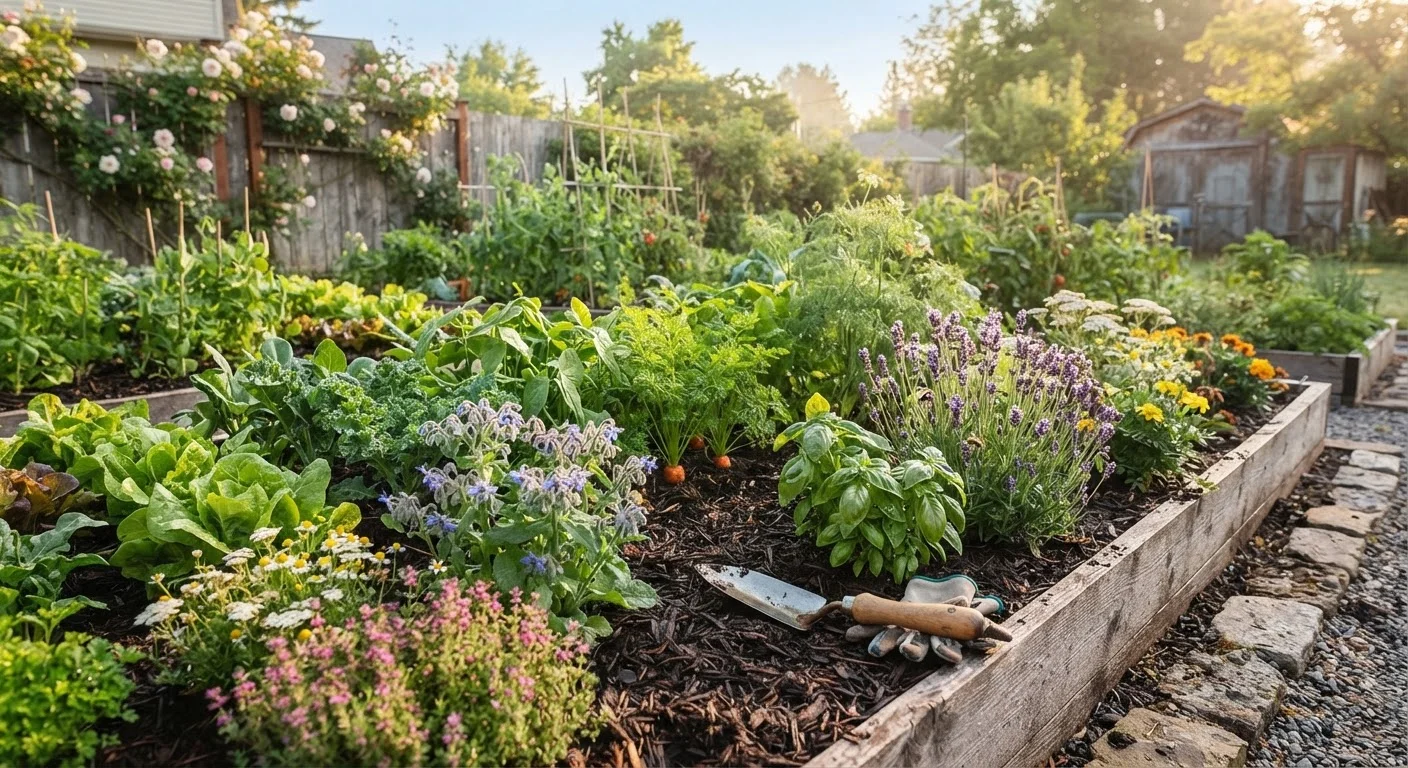
Why Habits Matter More Than Big Efforts
Experienced gardeners rarely describe dramatic rescue missions or weekend overhauls. What they talk about instead are small, reliable habits - things they do consistently, almost without thinking, that keep plants healthy and problems manageable. These aren't complicated techniques. They're the kind of steady attention that prevents a minor issue from becoming a lost season.
If you're just getting started, understanding the fundamentals first sets the foundation. Our guide on soil, sunlight, and water for beginning gardeners covers the core principles before you develop any routine around them. Once those basics are in place, the habits below are what experienced growers layer on top - season after season.
The Core Habits That Keep a Garden Productive
Each of the following practices is low-effort when done consistently and high-cost when neglected. They don't require specialized equipment or advanced knowledge - just regularity.
Deadhead flowering plants on a regular schedule throughout the growing season.
When a plant produces seeds, it shifts energy away from flowering. Removing spent blooms - called deadheading - signals the plant to keep producing flowers rather than putting resources into seed maturation. This extends the bloom period significantly for annuals and many perennials.
Test your soil pH at least once per season and amend as needed.
Nutrient availability is directly tied to soil pH. Even well-fertilized soil can starve plants if the pH is off. Testing takes minutes and removes the guesswork behind yellowing leaves or stunted growth that fertilizer alone won't fix.
Apply a 2-3 inch layer of mulch around plants and refresh it when it thins.
Mulch does three jobs at once: it slows water evaporation, suppresses weed germination, and buffers soil temperature during heat waves or cold snaps. Organic mulches like wood chips or straw also break down over time, gradually improving soil structure.
Scout your garden at least twice a week for pests, disease, and stress signs.
Most garden problems - aphid colonies, fungal infections, drought stress - are far easier to manage when caught early. A weekly walk-through lets you spot trouble before it spreads to neighboring plants or reaches a point where intervention is ineffective.
Keep a garden journal with dates, observations, and outcomes.
Memory is unreliable across a growing season, let alone from one year to the next. Notes on what worked, what failed, when pests arrived, and which varieties performed best are invaluable data that make every subsequent season easier and more productive.
Water deeply and infrequently rather than a little every day.
Frequent shallow watering encourages roots to stay near the surface, making plants more vulnerable to heat and drought. Deep, less-frequent watering trains roots to grow downward toward more stable moisture reserves, producing more resilient plants overall.
Soil pH Affects More Than You Think
Most vegetables and flowers thrive in a slightly acidic to neutral pH range of roughly 6.0-7.0, but exact preferences vary by plant. When pH drifts outside a plant's optimal range, nutrients already present in the soil can become chemically unavailable - meaning fertilizing won't help until pH is corrected. Inexpensive soil test kits are available at most garden centers, or you can submit a sample to your local cooperative extension office for a more detailed report.
For context on how these habits fit into the broader rhythm of the year, the gardening calendar by season is a useful companion reference.
Where to Begin If This Feels Like a Lot
You don't need to adopt all of these habits at once. The most effective approach is to start with one or two and let them become automatic before adding more. Deadheading and scouting for pests are good entry points - both are visual, satisfying, and immediately rewarding.
If you garden in containers rather than in the ground, these same habits apply - though container plants often need more frequent watering and pH monitoring since nutrients deplete faster in a confined volume of soil. See our overview of container gardening on patios and balconies for specifics.
And if watering habits feel uncertain, it's worth revisiting assumptions. Many common beliefs about garden watering turn out to be counterproductive - our article on garden watering myths covers what the evidence actually shows.
Consistent, small actions compound over a growing season. A garden tended with steady attention from May through October looks very different from one that receives occasional intensive effort - and it's far easier to maintain.
The content on this site is provided for informational purposes only and should not be considered a substitute for professional advice. While we strive to provide accurate and up-to-date information, we make no guarantees regarding its completeness or accuracy. Always consult a qualified professional for advice specific to your circumstances before making any decisions.