

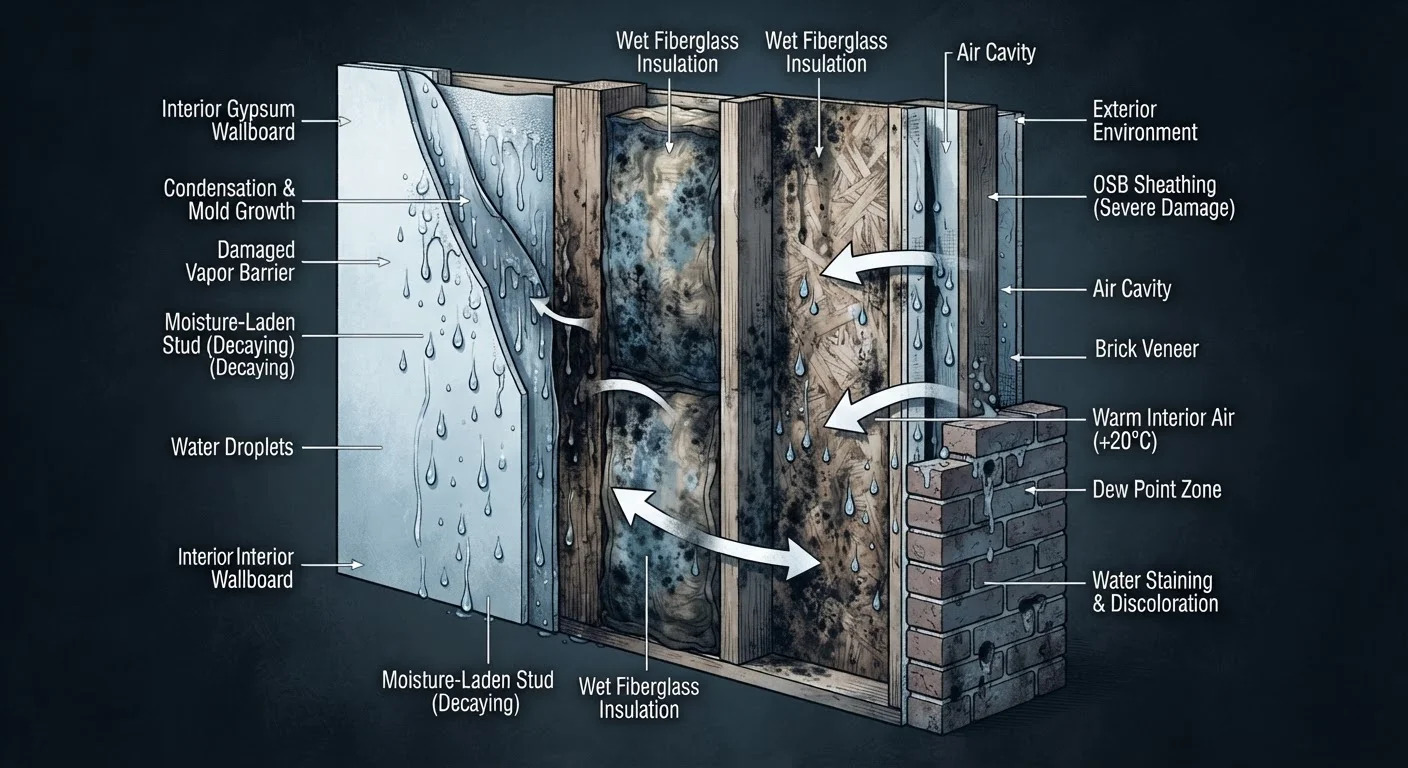
The Three Ways Moisture Enters a Wall
Wall moisture doesn't come from just one source - it arrives through three distinct mechanisms, and understanding each one helps you spot the correct cause before pursuing a fix.
Bulk Water Infiltration
This is the most straightforward path: liquid water physically enters the wall assembly through openings. Common sources include damaged or missing flashing around windows and doors, cracks in exterior cladding or masonry, and roof leaks that travel down into wall cavities. Overflowing or poorly routed gutters are a frequent culprit - when water spills over the gutter edge and runs against the siding repeatedly, it finds its way into gaps at the wall's surface. See our guide to gutter neglect for a closer look at how this damage compounds over time.
Condensation
When warm, humid air contacts a surface that is cooler than the air's dew point - the temperature at which air can no longer hold all its water vapor - condensation forms. Inside a wall, this commonly happens when interior warm air migrates outward in winter and hits a cold sheathing layer. The same dynamic occurs in reverse in hot climates: cool air-conditioned interior walls can cause warm humid outdoor air to condense as it seeps inward.
Vapor Diffusion
Even without any visible gap or crack, water vapor moves slowly through building materials from areas of high concentration to low. This process, called vapor diffusion, is usually slow but continuous. Over time, it can deliver meaningful amounts of moisture into wall assemblies, particularly if insulation or sheathing materials have a high vapor permeability.
What Happens When Moisture Gets Trapped
A wall's layered construction - drywall, insulation, framing, sheathing, and exterior cladding - is excellent at keeping water out when intact. That same layered structure becomes a liability when moisture gets in, because it restricts the airflow needed for drying.
Check the Dew Point Before Assuming You Have a Leak
Not every moisture stain comes from a plumbing or roof leak. If staining appears consistently during cold weather but not after rain, interior condensation may be the cause rather than an exterior breach. Identifying the correct source prevents ineffective repairs and wasted expense.
Degraded Insulation Performance
Fiberglass and cellulose insulation both lose thermal resistance when wet. Saturated insulation can compact or shift, creating gaps that allow heat transfer and drafts. This often shows up as higher utility bills before any visible wall damage appears.
Wood Rot and Structural Weakening
Wood framing exposed to sustained moisture begins to decay through fungal activity. The fungi that cause wood rot need moisture content above roughly 20% to thrive. Once rot establishes itself in wall studs or plates, it progressively weakens the wood's structural capacity. In severe cases, this can affect load-bearing walls, requiring significant repair before the damage can be dismissed as cosmetic.
Mold Growth
Mold spores are present in essentially every home environment. They become a problem when moisture gives them the conditions needed to colonize. Common building materials - drywall paper, wood, insulation - all serve as adequate food sources. Mold doesn't require standing water; relative humidity above 60-70% at a surface is sufficient. Once established, mold continues to grow and release spores into interior air as long as moisture persists.
Warning Signs Homeowners Shouldn't Ignore
Because most moisture damage happens inside wall cavities, it can progress significantly before becoming visible. Knowing the early indicators gives you a better chance of catching problems while repairs are still straightforward.
- Peeling or bubbling paint: Paint loses adhesion when the surface beneath it holds moisture. This is often the first visible symptom on interior walls near windows or on exterior-facing surfaces.
- Persistent musty odors: A musty smell without an obvious source commonly points to mold growing somewhere in the building envelope, including inside walls.
- Soft, spongy drywall: Press gently on a suspicious area. Drywall that has been wet will feel soft or may crumble at the edges.
- Staining or discoloration: Yellowish or brown staining that reappears after painting is typically caused by water migrating through the wall and depositing minerals or organic material on the surface.
- Increased allergy or respiratory symptoms indoors: While this is not diagnostic on its own, occupants noticing worsening symptoms at home - particularly in one area - may be reacting to elevated mold spore levels.
A handheld moisture meter can give you a non-invasive reading of surface moisture levels and help you determine whether further investigation is warranted before opening a wall.
Practical Steps to Reduce Moisture Risk
Preventing moisture intrusion is considerably less expensive than repairing its consequences. Most effective measures target either the building envelope or the interior humidity levels.
Seal the Exterior Envelope
Gaps around window and door frames, penetrations for pipes and wires, and joints in exterior cladding all provide entry points for bulk water and air-carried vapor. Sealing these openings with appropriate caulk or weatherstripping is one of the highest-value maintenance tasks a homeowner can perform. Inspect these areas annually and after severe weather.
Maintain Gutters and Drainage
Keep gutters clear and confirm that downspouts discharge water at least several feet away from the foundation and siding. Grading around the home should slope away from the structure to prevent water from pooling against the exterior wall base.
Manage Indoor Humidity
Kitchens, bathrooms, and laundry areas generate substantial moisture vapor. Use exhaust fans consistently when cooking or showering, and ensure they vent to the exterior rather than into attic or wall spaces. A whole-home or room-level dehumidifier can help keep indoor relative humidity in the 30-50% range - low enough to discourage mold growth without becoming uncomfortably dry.
Vapor Barrier Placement Varies by Climate
There is no one-size-fits-all rule for where vapor retarders belong in a wall assembly. In cold northern climates, they typically go on the interior (warm) side of insulation. In hot, humid southern climates, placement logic often shifts. Always check local building codes and consult a building professional before adding or relocating a vapor barrier, as incorrect placement can actually worsen moisture problems.
When to Call a Professional
If you find evidence of significant moisture damage - extensive mold, soft framing, recurring staining despite surface repairs - a licensed contractor or building performance specialist can use diagnostic tools like thermal imaging cameras and blower-door tests to locate moisture pathways that aren't visible to the eye. Structural framing repairs and large-scale mold remediation should be assessed and managed by qualified professionals.
Frequently Asked Questions
Common indicators include peeling or bubbling paint, soft or warped drywall, musty odors, and visible staining or discoloration. A moisture meter, available at most hardware stores, can detect elevated moisture levels in wall surfaces without cutting them open. Persistent cold spots on interior walls can also signal hidden moisture.
Yes, over time it can be. Condensation that forms repeatedly inside a wall cavity keeps materials damp long enough to support mold growth and accelerate wood decay. The danger increases when insulation becomes saturated, because wet insulation loses its thermal performance and stays damp for extended periods.
Not necessarily - the need for a vapor barrier and its correct placement depends on your climate zone. In cold climates, vapor retarders typically go on the warm interior side of insulation. In hot, humid climates, the logic can reverse. Local building codes reflect these differences, so consult your local requirements or a building professional before installing one.
Minor drywall repairs and surface mold on non-porous materials can often be addressed by confident DIYers. However, if moisture has reached the framing, insulation, or if mold covers a large area, a licensed contractor or remediation specialist should assess the damage. Structural framing repairs may also require permits.
In humid climates, warm moist outdoor air can push vapor inward through walls toward cooler, drier interior spaces. This vapor drive can cause condensation to form within the wall cavity if the air cools enough before it escapes. Proper insulation placement and vapor control layers are designed to interrupt this process.
The content on this site is provided for informational purposes only and should not be considered a substitute for professional advice. While we strive to provide accurate and up-to-date information, we make no guarantees regarding its completeness or accuracy. Always consult a qualified professional for advice specific to your circumstances before making any decisions.