

Why Tire Maintenance Matters
Tires are your vehicle's only contact with the road. Everything your car does - accelerating, braking, cornering - happens through four palm-sized patches of rubber. Neglecting them doesn't just shorten their lifespan; it directly affects your safety and fuel economy.
According to the National Highway Traffic Safety Administration (NHTSA), tire-related crashes cause thousands of accidents each year in the United States, many of them preventable with routine upkeep. The good news: most tire maintenance tasks are straightforward, inexpensive, and require little to no mechanical skill. See our DIY car checks guide for a broader walkthrough of checks any driver can handle.
Tire Pressure: The Most Important Weekly Check
Tire pressure is measured in PSI. Running tires at the wrong pressure - either overinflated or underinflated - accelerates wear, reduces grip, and can cause blowouts. Underinflated tires are the more common problem: they flex excessively, build heat, and significantly reduce fuel efficiency.
The correct PSI for your vehicle is printed on a sticker inside the driver's door jamb - not on the tire sidewall, which lists the tire's maximum pressure, not the recommended operating pressure. Always check pressure when tires are cold (driven less than a mile), as heat from driving temporarily increases readings. For a reliable specification, your owner's manual will have the exact figures.
Invest in a quality digital tire gauge and keep it in your glove box. Gas station gauges are notoriously inaccurate, and a reliable reading takes less than 60 seconds.
Accurate pressure data is the foundation of every other tire decision - a faulty gauge makes the whole check pointless.
When buying a new set of tires, ask the shop to check alignment before installation. Mounting new rubber on a misaligned vehicle will wear out the new tires prematurely.
New tires are a significant investment, and misalignment can noticeably shorten their service life within the first few thousand miles.
Don't forget the spare tire - check its pressure every time you inspect the others. A flat spare is worthless in an emergency.
Reading Tread Depth - And Knowing When It's Too Low
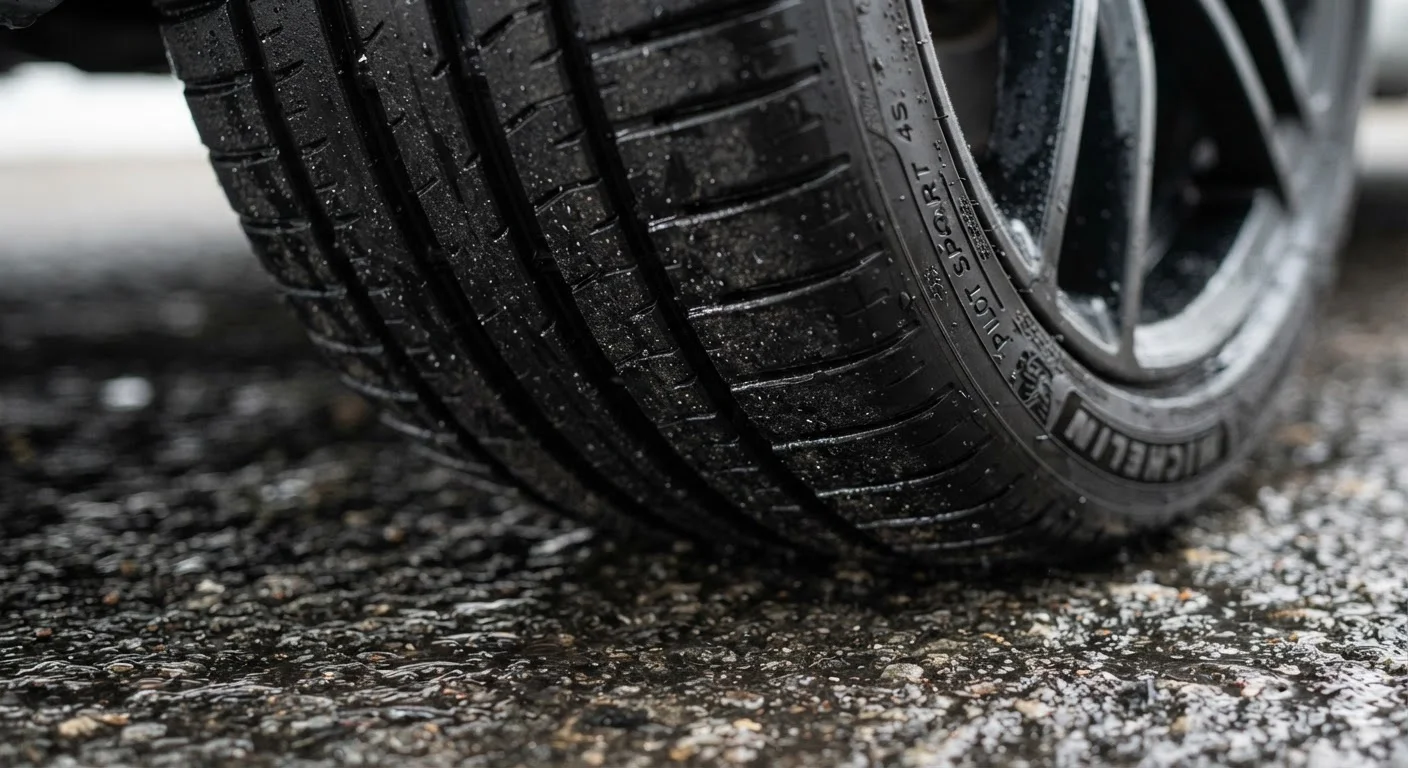
Tire tread depth is measured in 32nds of an inch. New tires typically start around 10/32" to 11/32". The legal minimum in most U.S. states is 2/32", but many safety experts recommend replacing tires at 4/32" - especially in wet or snowy conditions, where shallow tread struggles to channel water away from the contact patch.
The quickest field test: insert a penny into a tread groove with Lincoln's head pointing down. If you can see the top of Lincoln's head, tread depth is at or below 2/32" - replace the tires promptly. For an earlier warning, use a quarter: if Washington's head is visible, you're at roughly 4/32" and should start planning for replacement.
Also inspect tires for uneven wear patterns. Wear concentrated in the center suggests overinflation; wear on both edges points to chronic underinflation. Wear on one edge alone often signals an alignment problem.
Tire Rotation: Extending Even Wear
Front and rear tires wear at different rates depending on your vehicle's drivetrain and the demands placed on each axle. Front tires on front-wheel-drive vehicles, for example, handle both steering and power delivery - they wear considerably faster than rears.
Rotating tires - moving them between positions on the vehicle according to a set pattern - distributes wear more evenly and extends the overall life of the set. Most manufacturers recommend rotation every 5,000 to 7,500 miles, often conveniently aligned with oil change intervals. Your vehicle's owner's manual specifies the exact interval and the correct rotation pattern for your drivetrain. Avoid the common myths around service intervals that can lead drivers to skip or delay necessary maintenance.
Wheel Alignment and Balancing Explained
Alignment refers to the angles at which your tires contact the road. When alignment drifts out of spec - often due to hitting potholes or curbs - tires scrub against the pavement at a slight angle, causing rapid, uneven wear. Signs include your vehicle pulling to one side or a steering wheel that sits off-center when driving straight.
Balancing is a separate service that corrects weight imbalances in a tire-and-wheel assembly. An unbalanced wheel causes vibration, typically felt in the steering wheel at highway speeds, and can accelerate wear on suspension components.
Alignment should be checked annually or any time you notice pulling, uneven wear, or after a significant impact. Balancing is typically addressed when mounting new tires or when vibration appears. Both services require shop equipment and should be performed by a qualified technician. Understanding your braking system alongside tire condition gives you a more complete picture of your vehicle's safety-critical components.
Seasonal Considerations and Road Trip Prep
Temperature directly affects tire pressure: PSI drops roughly 1 pound for every 10°F decrease in ambient temperature. This means tires that are correctly inflated in summer may read low come winter - check and adjust pressure as seasons change.
In regions with harsh winters, all-season tires have limits. A dedicated set of winter tires - made from a softer rubber compound that stays pliable in cold temperatures - provides meaningfully better traction on snow and ice than all-seasons. If you make the switch, having both sets mounted on separate wheels simplifies the swap each season.
Before any long drive, tires deserve a focused inspection. Check pressure, inspect tread depth, look for sidewall bulges or cracks, and confirm the spare is serviceable. Our pre-road-trip vehicle checklist covers tires alongside every other critical system to review before you head out.
The content on this site is provided for informational purposes only and should not be considered a substitute for professional advice. While we strive to provide accurate and up-to-date information, we make no guarantees regarding its completeness or accuracy. Always consult a qualified professional for advice specific to your circumstances before making any decisions.